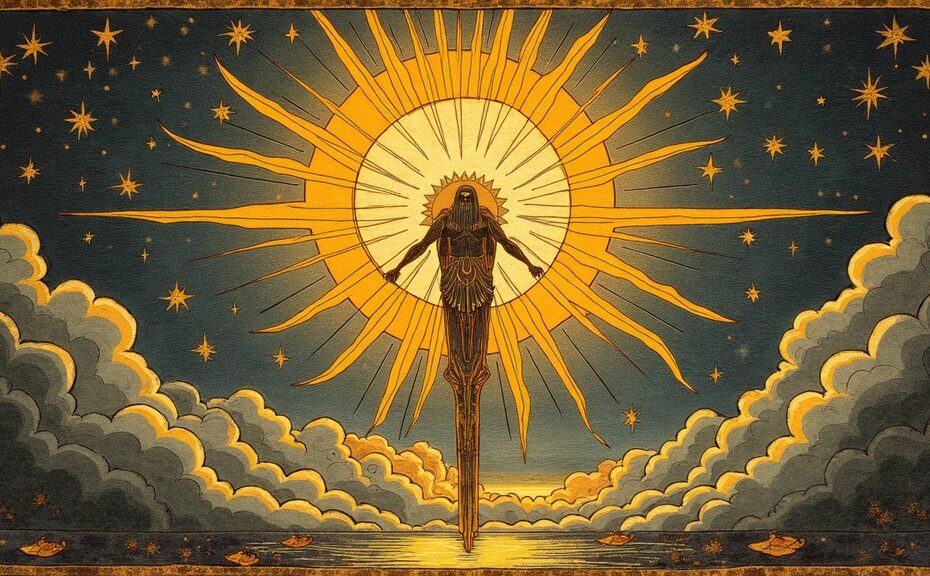
The Astral Light, as a concept, holds the key to understanding the evolution of magical thought in the 19th century, and its impact on the development of modern theurgical practices. This notion, introduced by Eliphas Levi in his seminal work ‘Dogme et Rituel de la Haute Magie’, posits the existence of a divine, all-pervasive energy that underlies the fabric of reality. As we delve into the history of Western occultism, it becomes evident that Levi’s doctrine of the Astral Light had a profound influence on the development of the Golden Dawn’s theurgy, particularly in the works of William Wynn Westcott and Samuel Liddell Mathers.
Levi’s concept of the Astral Light can be seen as a bridge between the spiritual and material realms, a mediator that facilitates the interaction between the divine and human consciousness. This idea was revolutionary for its time, as it provided a framework for understanding the mysteries of the universe and the human condition. The Astral Light, according to Levi, is a luminous, ethereal substance that permeates all of existence, serving as a conduit for the transmission of magical forces. This notion not only expanded the understanding of the natural world but also offered a new perspective on the nature of the self and the human potential for spiritual growth.
The Golden Dawn, a prominent occult society of the late 19th and early 20th centuries, was deeply influenced by Levi’s work. The society’s founders, Westcott, Mathers, and William Robert Woodman, were well-versed in Levi’s teachings and incorporated many of his ideas into their own system of magic. The concept of the Astral Light, in particular, played a crucial role in shaping the Golden Dawn’s approach to theurgy, which they defined as the “Art of Divine Magic”. This art, as outlined in the Golden Dawn’s teachings, aimed to facilitate the union of the individual self with the divine, thereby attaining spiritual enlightenment and mastery over the forces of nature.
Mathers, one of the most prominent figures in the Golden Dawn, was especially drawn to Levi’s concept of the Astral Light. In his own writings, Mathers often referenced Levi’s work, acknowledging the French occultist’s contribution to the development of modern magical thought. Mathers’ seminal work, ‘The Book of the Sacred Magic of Abramelin the Mage’, demonstrates a clear understanding of Levi’s doctrine of the Astral Light, which he applied to the Golden Dawn’s system of theurgy. By recognizing the Astral Light as a divine, animating force, Mathers and his colleagues were able to develop a comprehensive system of magic that integrated the spiritual and material realms.
The Golden Dawn’s theurgy, as influenced by Levi’s concept of the Astral Light, can be seen as a form of spiritual alchemy. This process aimed to transform the individual, elevating their consciousness and allowing them to access higher states of awareness. The Astral Light, in this context, served as a catalyst for spiritual growth, facilitating the union of the individual self with the divine. This idea is reflected in the Golden Dawn’s teachings on the Kabbalistic Tree of Life, which depicts the Astral Light as a luminous, divine energy that permeates the Sephiroth, or divine emanations.
The influence of Levi’s doctrine of the Astral Light can also be seen in the Golden Dawn’s use of ritual magic. The society’s rituals, as outlined in their manuscripts and teachings, often involved the invocation of the Astral Light, which was seen as a means of accessing higher states of consciousness and facilitating the union of the individual self with the divine. This approach to ritual magic, which emphasized the importance of the Astral Light, allowed the Golden Dawn’s adepts to experience a deeper sense of connection with the universe and the mysteries of the human condition.
The recent resurgence of interest in Levi’s works, coupled with the ongoing study of the Golden Dawn’s manuscripts and teachings, provides a unique opportunity to explore the historical connections between these two influential figures in Western occultism. As we examine the development of the Golden Dawn’s theurgy, it becomes evident that Levi’s concept of the Astral Light played a profound role in shaping their approach to magic and spirituality. The Astral Light, as a concept, continues to hold a profound significance for modern practitioners of theurgy, offering a framework for understanding the mysteries of the universe and the human potential for spiritual growth.
As we reflect on the influence of Levi’s doctrine of the Astral Light on the Golden Dawn’s theurgy, we are reminded of the profound impact that this concept has had on the development of modern magical thought. The Astral Light, as a divine, animating force, continues to serve as a catalyst for spiritual growth, facilitating the union of the individual self with the divine. This notion, which was once considered revolutionary, has become an integral part of the Western occult tradition, influencing generations of magical practitioners and spiritual seekers. As we move forward in our understanding of the mysteries of the universe, the concept of the Astral Light remains a powerful reminder of the magic that lies just beyond the veil of the mundane world, waiting to be explored and experienced by those who dare to venture into the unknown.