
Relationship Spread #2
Difficulty: Easy
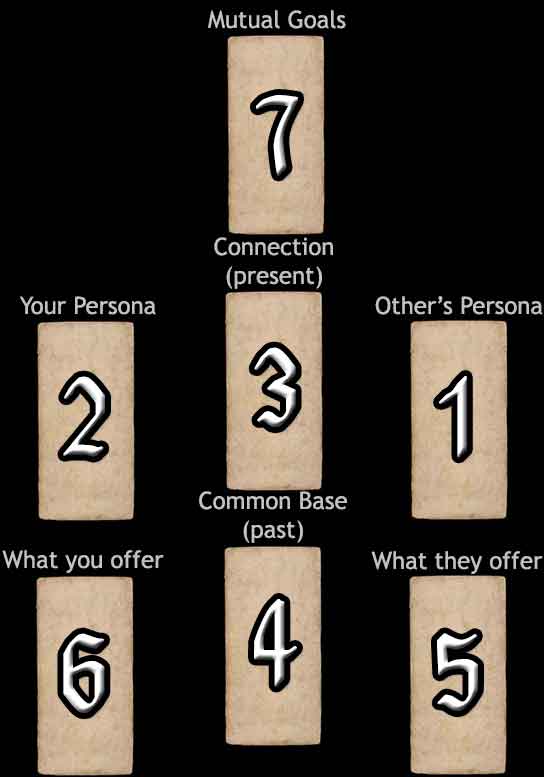
This relationship spread focuses more on the common ground of the relationship, with three cards in the middle column showing the common ground. The middle column essentially displays the past, present, and future of the relationship.
Card #4 stands for the common base of the relationship, which may be thought of as the past events which have shaped their characters, bringing them together. The current connection that binds them together is Card #3, indicating the values shared. Card #7 implies the common goals that would keep the pair together moving into the future.
The columns on either side show what each partner brings to the table. Remember, relationships need not be romantic, and the partners could even be groups rather than individuals. In this layout, the other person is on the left-hand side and the reader on the right.
Cards #1 & #2 indicate the separate personalities of each member of the relationship. These cards form a sort of bridge with the cards beneath them, #5 & #6, which show the qualities that each partner offers the other person, and thus to the relationship as a whole.
Your Relationship #2 Reading
Mutual Goals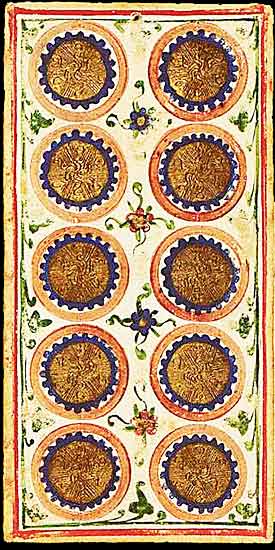 |
||
Your Qualities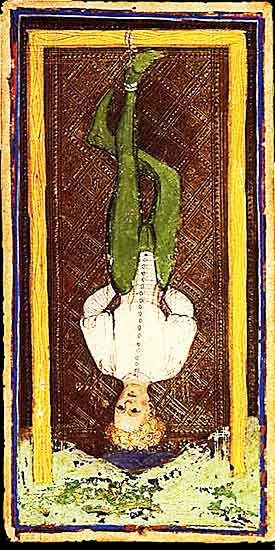 |
Connection (Present)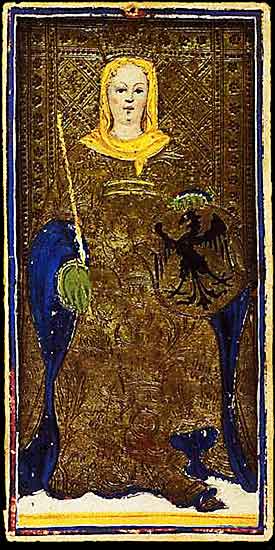 |
Others' Qualities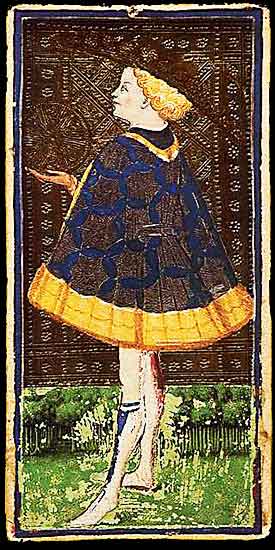 |
What You Bring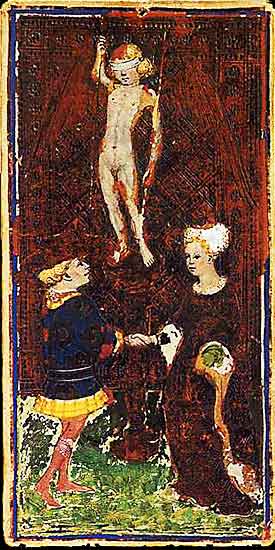 |
Common Base (Past)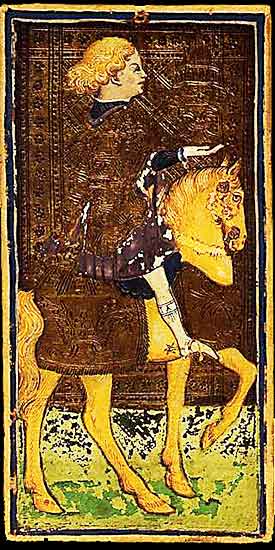 |
What They Bring 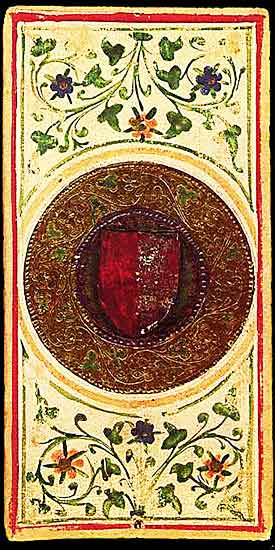 |
7: Mutual Goals
Ten of Coins
The Ten of Coins signifies wealth, legacy, and long-term success. It represents a culmination of efforts that have resulted in financial stability and the ability to pass on a legacy. This card celebrates family, heritage, and the fulfilment of long-term goals.
Symbolism: The symmetrical arrangement of ten coins emphasises completion, legacy, and the culmination of a journey. The rich details of the coins reflect the lasting impact of your achievements.
In Relationships: Stability, commitment, and family. The Ten of Coins speaks to building a lasting foundation for future generations and finding fulfilment in long-term relationships.
In Work: A time of financial abundance and career success. This card indicates that you have achieved a stable and prosperous position, and your legacy is secure.
Spiritually: A sense of fulfilment and the ability to pass on wisdom to future generations. The Ten of Coins encourages you to focus on leaving a lasting, positive legacy.
When ill-dignified: Stagnation, generational wealth without purpose, or difficulty passing on your legacy. The Ten of Coins warns against becoming too focused on material wealth at the expense of relationships or spiritual growth.
3: Connection
III – The Empress
The Empress symbolises abundance, creativity, and nurturing energy. She represents the generative force of nature and the ability to create and sustain growth, both literally and figuratively.
Symbolism: The Empress's sceptre and crown symbolise her authority, while her shield connects her to the Visconti family lineage. The floral embroidery on her gown reflects her connection to nature and fertility. The golden background underscores her divine and regal status.
In Relationships: A time of emotional abundance and nurturing. The Empress signals love, harmony, and growth.
In Work: Creative projects flourish under the Empress's guidance. She encourages nurturing ideas and building strong foundations.
Spiritually: The Empress represents the divine feminine, inviting the seeker to embrace growth and connect with nature's rhythms.
When ill-dignified: Stagnation, overindulgence, or a smothering presence in relationships.
4: Common Base
Knight of Cups
The Knight of Cups represents emotional pursuit, idealism, and romanticism. It speaks to the pursuit of dreams, following one's heart, and embarking on emotional quests with passion and dedication.
Symbolism: The knight on horseback, holding a cup, exudes an energy of romantic idealism and emotional drive. The pale horse's steady gait and the knight's confident posture suggest a balance between passion and grace.
In Relationships: Pursuing romance with enthusiasm and idealism. The Knight of Cups suggests a time of emotional pursuit, whether the beginning of a romance or a passionate phase in an existing relationship.
In Work: A pursuit of creative or emotional fulfilment. This card represents following your heart and idealism in professional endeavours.
Spiritually: The quest for spiritual or emotional fulfilment. The Knight of Cups invites you to pursue your highest ideals and trust your intuition on your spiritual journey.
When ill-dignified: Impulsiveness, emotional highs and lows, or unrealistic expectations. The Knight of Cups warns against becoming too idealistic or pursuing unrealistic goals without grounding.
2: Your Qualities
XII – The Hanged Man
The Hanged Man represents a moment of suspension, transformation, and the profound wisdom of surrender. It is the card of acceptance, urging one to release control and embrace a new perspective, even at the cost of discomfort.
Symbolism: The figure's suspended position signifies the state of hanging between worlds, a soul caught in the liminal space between the old and new. The calm expression of surrender contrasts with his precarious state, highlighting the necessity of letting go to gain understanding. The patterns of his tunic, combined with the golden glow, evoke a sacred pause in time, elevating this card to a spiritual level.
In Relationships: A time to step back and reassess your emotional life. Patience, understanding, and self-reflection are required. The card suggests moments of stillness can lead to profound growth in relationships.
In Work: Professional progress comes through rethinking old strategies. The Hanged Man indicates that a temporary pause or a shift in perspective can lead to breakthroughs.
Spiritually: The card speaks to spiritual enlightenment through sacrifice and release. You are called to surrender to the flow of life and gain higher wisdom.
When ill-dignified: Resistance to change, stagnation, and a refusal to let go. This warns against being trapped by fear or obstinance, preventing personal growth.
1: Their Qualities
Knave of Coins
The Knave of Coins symbolises curiosity, learning, and the pursuit of material knowledge. It represents a youthful figure starting a journey of growth, especially in the material or financial realm. This card speaks to new opportunities for learning and exploration, especially in practical skills.
Symbolism: The Page's focused posture, with the coin held carefully, reflects a contemplative approach to new opportunities. The lush green surroundings suggest growth and vitality, while the metallic background represents potential and opportunity.
In Relationships: A new phase in love where learning, growth, and exploration are important. The Knave of Coins suggests an enthusiastic approach to relationships, eager to build something lasting.
In Work: Beginning a new career journey or learning a new skill. This card encourages you to embrace new opportunities and focus on your development.
Spiritually: A time of spiritual learning and exploration. The Knave of Coins invites you to seek new spiritual practices or teachings to expand your path.
When ill-dignified: Naivety, immaturity, or a lack of focus. The Knave of Coins warns against superficial approaches or neglecting the work required for growth.
6: What You Bring
VI – The Lovers
5: What They Bring
Ace of Coins
The Ace of Coins symbolises new beginnings, prosperity, and material abundance. It represents the potential for success and growth, especially in financial or practical matters. This card speaks to opportunities that can lead to long-term stability and tangible rewards, laying the foundation for prosperity.
Symbolism: The coin represents a seed of potential, offering the promise of wealth, success, or material security. The subtle background allows the coin's design to take centre stage, highlighting the auspicious nature of this opportunity.
In Relationships: New beginnings or opportunities to build a secure and prosperous relationship. The Ace of Coins invites you to invest in a long-term, stable partnership.
In Work: A new opportunity for financial gain or career advancement. This is a time to focus on practical steps towards building a secure foundation.
Spiritually: A time to focus on manifesting your material and spiritual desires. The Ace of Coins calls for alignment between your physical and spiritual goals.
When ill-dignified: Missed opportunities, poor financial decisions, or a lack of effort to build towards long-term goals.