
Game Plan Spread
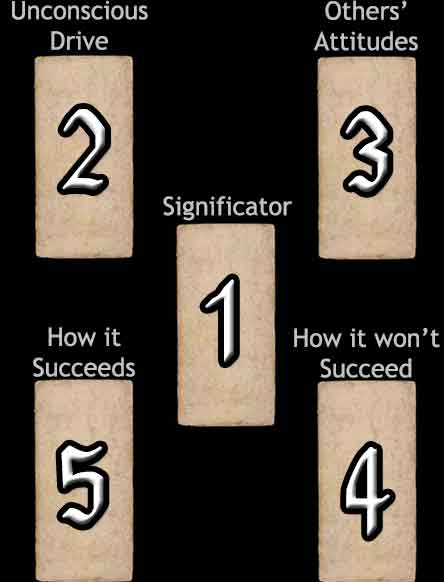
Difficulty: Easy
When a person has a certain plan in mind, this simple five-card spread presents a choice, hinting at what action or attitude should be taken for their plan to succeed, and what should be avoided to help the plan work out for the best.
The initial card is laid in the centre of the layout, the significator. The following four cards are laid out clockwise around the significator.
In this spread, the second card is about what drives the reader, but also says they are not fully conscious of this, perhaps even completely unaware of it. It provides a hint as to the reason they strive for their goal.
The third card uncovers what others think of the reader and their goals. The reader may or may not be aware of this. Sometimes other people factor into the plans (and sometimes they don't).
The fourth card suggests what not to do. If things are permitted to go down this path, the plan will collapse.
The fifth card is a hint as to how to make this plan work out favourably. The idea this card presents should be followed to make the plan successful. It is the differences between Cards #4 & #5 that should be noted, as the differences provide important clues.
Your Game Plan Reading
Unconscious Drive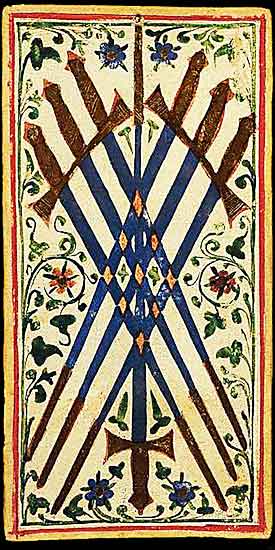 Seven of Swords |
External Influences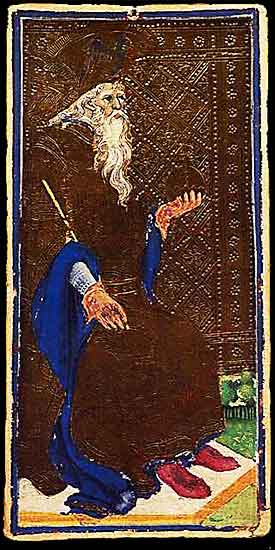 IV – The Emperor |
|
Significator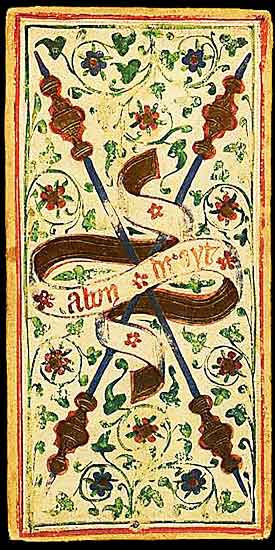 Two of Staves |
||
How it Will Succeed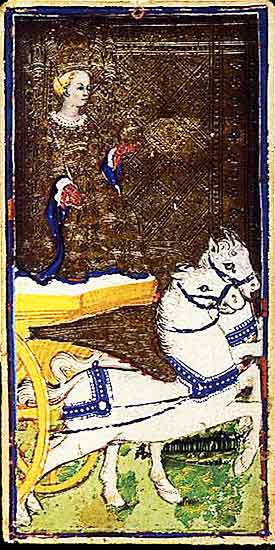 VII – The Chariot |
How it Will Not Succeed King of Staves |
Two of Staves
The Two of Staves symbolises duality, decision-making, and the balancing of forces. It represents a time when a choice must be made, but the way forward is clear only through contemplation and internal balance.
Symbolism: The two staffs, arranged symmetrically, reflect the concept of partnership, opposition, or balance. The delicate flourishes at the bases suggest that, though the decision may be significant, it need not be rushed. The flowery background continues the theme of elegance, inviting you to focus on the inner dynamics between opposing forces.
In Relationships: A decision lies ahead—whether to commit, balance differences, or choose a path together. This card invites careful deliberation before taking action.
In Work: A time to evaluate your options, whether expanding your horizons or staying the course. It speaks to the importance of balancing ambition with patience.
Spiritually: The Two suggests an inner conflict or a need to find balance within yourself. This card encourages introspection and a search for harmony.
When ill-dignified: Indecision, imbalance, or the inability to make a clear choice. You may be stuck in a state of conflict, unable to resolve opposing forces in your life.
Seven of Swords
The Seven of Swords represents secrecy, deception, and strategy. It speaks to situations where you may feel the need to be clever, sneaky, or evasive to get what you want. This card can indicate an act of stealth or even betrayal, but it also highlights the need for careful planning and discretion.
Symbolism: The unbalanced arrangement of the swords suggests movement, stealth, and uncertainty. The overlapping blades hint at hidden motives or the complexity of a situation that requires more than just straightforward action.
In Relationships: Hidden agendas or deception. The Seven of Swords advises caution, as someone may not be entirely honest with you or you may be hiding something.
In Work: Strategic planning or taking calculated risks. The Seven of Swords can suggest that you are working behind the scenes to achieve your goals, but caution is needed to avoid deceit.
Spiritually: Secrets or hidden truths within your spiritual path. This card encourages you to examine any areas where dishonesty or avoidance might be hindering your growth.
When ill-dignified: Betrayal, dishonesty, or evasion. The Seven of Swords warns against deceitful actions or neglecting the truth for personal gain.
IV – The Emperor
The Emperor symbolises structure, authority, and stability. He represents the power of rules and order to create security and success, though sometimes at the expense of flexibility.
Symbolism: Seated upright with a sceptre and orb, the Emperor exudes control and dominion. His luxurious robes and the golden background emphasise his regal and unshakable power. His stillness reflects his role as a protector of order and enforcer of discipline.
In Relationships: A relationship built on structure and commitment. It can suggest the presence of a protective partner or the need to establish boundaries.
In Work: Leadership, organisation, and discipline are essential for achieving success. The Emperor encourages taking control and assuming responsibility.
Spiritually: The Emperor teaches the importance of structure and discipline in spiritual practice, encouraging grounded growth.
When ill-dignified: Tyranny, rigidity, or abuse of power. It warns against controlling behaviours or excessive adherence to rules.
King of Staves
The King of Staves represents authority, vision, and mastery. He is the embodiment of focused action, leadership, and the ability to direct energy towards a clear, long-term goal.
Symbolism: The King sits on his throne, holding his staff with dignity. His royal robes and crown symbolise his mastery and wisdom, while his composed expression suggests thoughtful decision-making. The repeating ornate pattern in the background reinforces the themes of structure, control, and power.
In Relationships: Leadership, vision, and maturity. The King of Staves represents a steady and visionary partner who provides guidance and stability.
In Work: Mastery of your craft and a clear vision for your future. The King encourages strategic leadership and long-term planning in your professional endeavours.
Spiritually: Mastery over your spiritual path. The King of Staves invites you to embody your inner wisdom and use it to lead others or further your own spiritual journey.
When ill-dignified: Dictatorship, narrow-mindedness, or rigid thinking. This card warns against becoming too controlling or focused only on your vision at the expense of others' needs.
VII – The Chariot
The Chariot symbolises determination, willpower, and triumph through self-discipline. It represents the ability to move forward and achieve success by mastering conflicting forces.
Symbolism: The stationary horses reflect control rather than speed, while the charioteer's detailed attire and golden background emphasise victory and refinement. The calm pose suggests strength in discipline over chaos.
In Relationships: A time to take charge of your relationship's direction. The Chariot signals progress but warns against domination.
In Work: Triumph through focus and determination. It's a call to harness all resources and overcome obstacles confidently.
Spiritually: The Chariot encourages the mastery of inner conflicts to progress along the spiritual path.
When ill-dignified: Loss of direction, lack of control, or excessive force. It warns against being carried away by ambition or unchecked emotions.