
Cross Spread
Difficulty: Easy
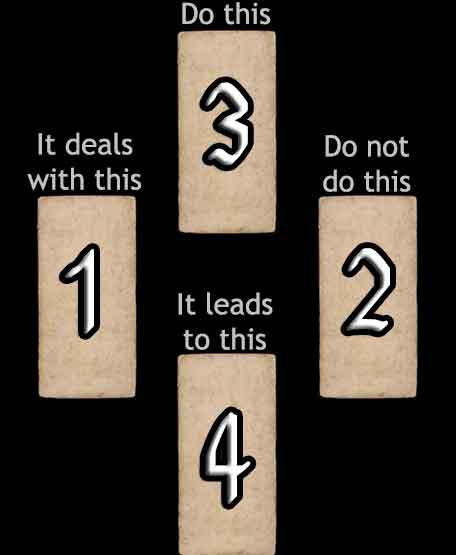
The Cross Spread is good for questions asking for advice. It can also be used to determine the meaning of a confusing card from a previous reading, or for that matter, to shed light on other points of confusion.
In questions asking advice, this tarot spread is self-explanatory. The main thing is to determine the difference between cards #2 and #3. #1 is the topic and #4 is the result.
In questions regarding confusion, such as: "What was the meaning of Card (X) in the last spread?" the main thing is also to determine the difference between cards #2 and #3. In this case, #2 will show what the card was not referring to, and Card #3 will show what was really meant. Card #1 is the topic and #4 represents the purpose it serves.
Your Cross Reading
DO This King of Coins |
||
It Deals with This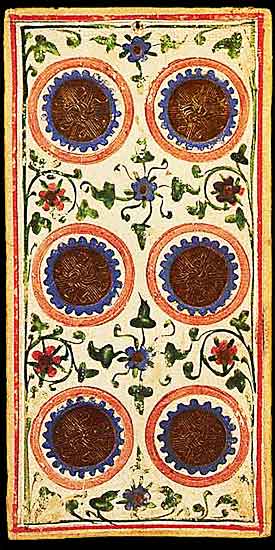 Six of Coins |
Do NOT Do This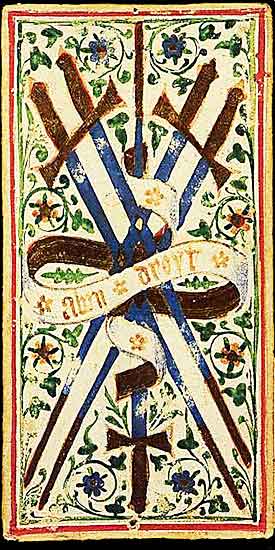 Five of Swords |
|
It Leads to This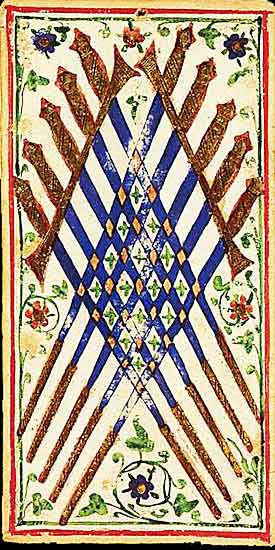 Ten of Swords |
It Deals with This
Six of Coins
The Six of Coins represents generosity, charity, and balance in giving and receiving. It speaks to the flow of wealth, where resources are shared. This card emphasises the importance of fair exchange and the joy of helping others.
Symbolism: The even arrangement of the six coins suggests balance and fairness. The vertical alignment represents the flow of giving and receiving, highlighting harmony in financial or material exchanges.
In Relationships: A balanced relationship where both partners give and receive equally. The Six of Coins encourages acts of kindness, generosity, and mutual support.
In Work: Financial generosity or fair exchanges at work. This card suggests that assisting others can bring abundance and harmony into your career.
Spiritually: The spiritual law of giving and receiving. The Six of Coins encourages you to give freely, knowing that your actions will come back to you in time.
When ill-dignified: Imbalance in giving or receiving, manipulation, or exploitation. The Six of Coins warns against selfishness or using generosity to manipulate others.
Do NOT Do This
Five of Swords
The Five of Swords represents conflict, competition, and mental struggle. It suggests a situation where victory may come at a cost, with tension and discord present. This card can indicate a win achieved through manipulation, dishonesty, or at the expense of others.
Symbolism: The swords are arranged in an unbalanced formation of four-on-one, highlighting the disharmony and imbalance created by conflict. The uneven positioning of the blades reflects the instability caused by mental or emotional discord, while their fine craftsmanship hints at the complexity of the situation.
In Relationships: Conflict or mental challenges. The Five of Swords suggests that a fight or disagreement may have left scars, and one must decide whether to continue fighting or walk away.
In Work: A competitive or combative environment. This card warns that achieving success at the expense of others may lead to resentment or long-term harm.
Spiritually: Mental conflict or inner turmoil that disrupts your peace of mind. The Five of Swords advises resolving spiritual disputes and finding reconciliation within yourself.
When ill-dignified: Deception, defeat, or unnecessary conflict. The Five of Swords warns against manipulative behaviour or unnecessary mental battles that lead to no real resolution.
DO This
King of Coins
The King of Coins signifies mastery of wealth, business, and material resources. He is a figure of authority and stability, using his intelligence and experience to build lasting wealth. This card speaks to leadership, responsibility, and achieving long-term financial success.
Symbolism: The King's commanding posture and golden robes reflect his mastery and authority in the material world. The coin he holds symbolises his wealth, and the background design speaks to the regal nature of his position.
In Relationships: A stable partner focused on creating long-term prosperity for their family. The King of Coins encourages a mature, responsible approach to relationships.
In Work: Mastery in your career or business, especially in financial management. The King of Coins represents achieving a position of leadership or success through wisdom and effort.
Spiritually: Mastery over your material world and the wisdom to balance it with your spiritual life. The King of Coins suggests stability and prosperity grounded in wisdom.
When ill-dignified: Materialism, greed, or a desire for control. The King of Coins warns against focusing only on wealth at the expense of relationships or spiritual growth.
It Leads to This
Ten of Swords
The Ten of Swords signifies an overwhelming and painful ending. It suggests a situation that has reached its breaking point, often after a period of mental or emotional strain. This card points to the finality of a difficult chapter and the potential for renewal after a painful conclusion.
Symbolism: The array of ten swords represents the intensity of betrayal, loss, or defeat. The overwhelming nature of the arrangement emphasises the depth of the crisis. The contrast between the swords and the flowered background highlights the gravity of the situation and the possibility of a new beginning once the pain subsides.
In Relationships: A painful breakup or emotional betrayal. The Ten of Swords marks the end of a challenging relationship or emotional chapter but also signals the opportunity for healing.
In Work: The culmination of a difficult period at work, possibly signalling job loss or failure. This card suggests that, while painful, the end of this chapter clears the way for new opportunities.
Spiritually: A painful spiritual awakening or crisis. The Ten of Swords invites you to embrace the lessons learned and recognise that endings often bring new beginnings.
When ill-dignified: A protracted period of suffering or an unwillingness to move on from the past. The Ten of Swords warns against dwelling in pain or allowing it to define you.