
Comic Strip Spread
Difficulty: Easy
Note: This spread works best with decks like the Diary of a Broken Soul or Surrealist Tarot because they display scenes rather than pips and do not use reversals.
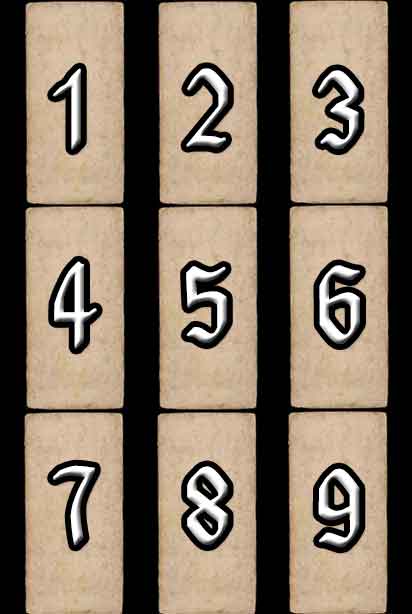
The Comic Strip Spread is a simple nine-card chronological spread that looks like a page of a comic book. This method should be used to get a glimpse of the future as it would pan out naturally. It may be insightful to use this spread in coordination with biorhythms. The spread is easy to read as a storyboard, just like a comic strip.
The main subject is apparent in the first card, while the story plays out through the following tarot cards.
It is important to pay particular attention to the cards and the relationships with their neighbours. Notice which directions the cards are facing, and how they interact.
Your Comic Strip Reading
Four of Staves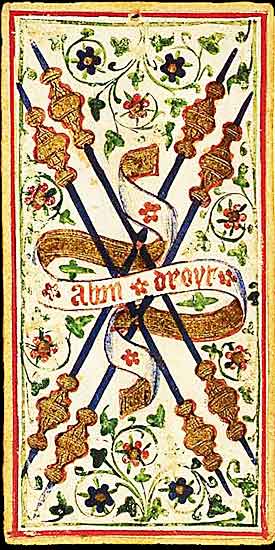 |
Ten of Cups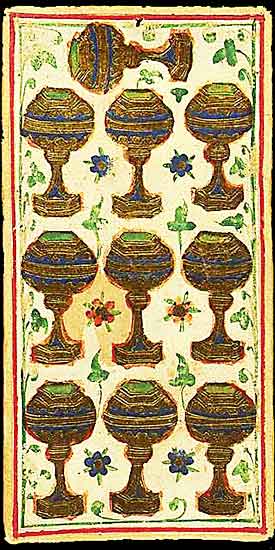 |
II – The Popess |
I – The Magician |
Ace of Staves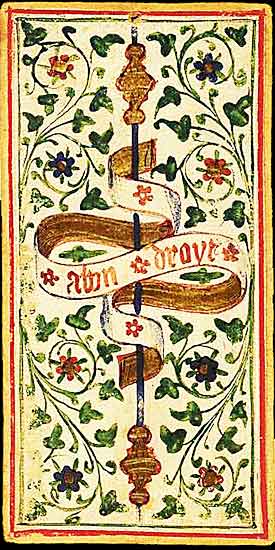 |
XVI – The Tower (Lost card, substituted here)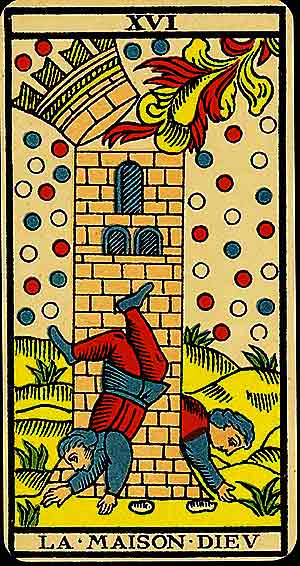 |
XII – The Hanged Man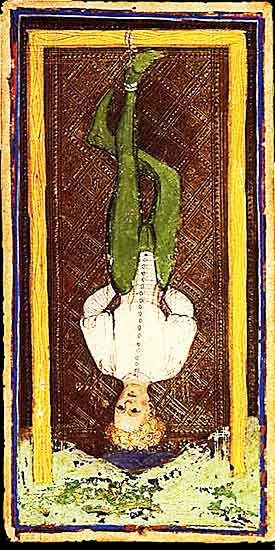 |
Seven of Swords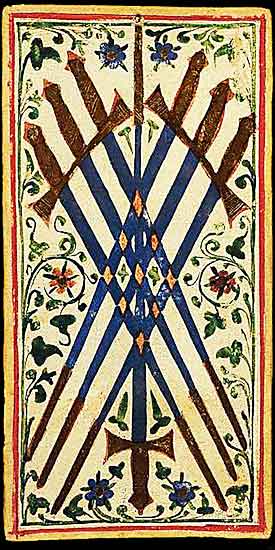 |
Two of Swords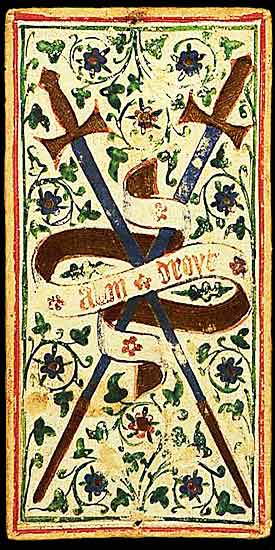 |
Card 1: Four of Staves
The Four of Staves represents completion, stability, and celebration. It signifies a time of solid foundations, harmony, and joy in both personal and professional endeavours.
Symbolism: The four staves, arranged in a balanced, crossing pattern, suggest structure and completion. The subtle detailing reflects refinement and attention to detail, while the flowery backdrop emphasises the simplicity and elegance of the accomplishment. The card's composition signifies a time to celebrate what has been achieved and appreciate the stability now in place.
In Relationships: A time of stability and celebration within your relationship. The Four of Staves suggests harmony, engagement, or even marriage. It's a time to enjoy the fruits of shared efforts.
In Work: Achievement and recognition. This card signifies the completion of a project, a successful milestone, or the solidification of your professional position.
Spiritually: A sense of spiritual fulfilment and peace. The Four of Staves indicates that you are grounded in your spiritual journey, enjoying the harmony you've created within.
When ill-dignified: Complacency or an inability to move beyond the current structure. It may indicate the stability you've achieved has become stagnant, or you've lost sight of future growth.
Card 2: Ten of Cups
The Ten of Cups represents emotional completion, harmony, and fulfilment. It signifies a time of lasting happiness, contentment, and the realisation of emotional dreams. This card speaks to family, love, and the joy of emotional unity.
Symbolism: The ten chalices arranged in two rows of five suggest a perfect balance and alignment of emotional forces. The detailed decoration of the cups emphasises the richness of emotional life and the culmination of desires fulfilled.
In Relationships: The achievement of emotional harmony and fulfilment in your relationships. The Ten of Cups signals lasting love, happiness, and emotional contentment.
In Work: A sense of emotional fulfilment in your professional life, especially in work that aligns with your values and passions.
Spiritually: Complete emotional and spiritual harmony. This card invites you to embrace the fulfilment of your soul's desires and live in emotional balance.
When ill-dignified: Emotional discontent, disharmony, over-indulgence, or a sense that things are not as perfect as they appear. The Ten of Cups warns against taking happiness for granted.
Card 3: II – The Popess
The Popess signifies intuition, mystery, and hidden wisdom. She represents the need to look inward and trust one's inner voice while respecting the unknown and unseen.
Symbolism: Her veil and book symbolise the sacred mysteries she guards. The golden background elevates her presence, while her fancy robes reflect the complexity of her spiritual knowledge. Her composed demeanour conveys her role as a keeper of divine truths.
In Relationships: A time to trust your instincts. The Popess may suggest unspoken feelings or the need for patience.
In Work: Hidden opportunities or knowledge may come to light. Use intuition and discretion when making decisions.
Spiritually: A call to explore inner wisdom and the mysteries of life. Trust the subtle guidance of intuition.
When ill-dignified: Secrets, deception, or an overreliance on logic at the expense of intuition.
Card 4: I – The Magician
The Magician embodies skill, potential, and the power to manifest. He represents the mastery of tools and resources, as well as the confidence to create one's reality. This card speaks of the importance of focus and action in shaping personal success.
Symbolism: The Magician's table holds simple tools, symbolising practical skills and raw materials. His Renaissance attire conveys refinement and expertise, while the golden background suggests his elevated role in shaping the material world. His seated position emphasises composure and control over his craft.
In Relationships: A call to use charm and communication to strengthen relationships. It warns of manipulation if ill-intentioned.
In Work: A time to take initiative and harness your abilities to achieve success. The Magician encourages innovation and confidence.
Spiritually: The Magician bridges the physical and spiritual, reminding the seeker to channel divine inspiration into practical actions.
When ill-dignified: Misuse of skills, deception, or scattered energy. It warns against overconfidence or manipulation.
Card 5: Ace of Staves
The Ace of Staves represents the spark of creation, vitality, and the raw energy of new beginnings. It embodies the potential of a seed, ready to sprout and grow into something magnificent. This is the card of inspiration, energy, and the initiation of new ventures.
Symbolism: The upright staff, with its textured bark and emerging sprout, symbolises the beginning of a new cycle, full of potential and promise. The plain tan background highlights the purity and simplicity of the elemental energy, inviting you to step forward with enthusiasm and confidence. The sprout near the base reminds you that all growth begins with a single step.
In Relationships: A new beginning or a burst of passion in your romantic life. The Ace invites fresh energy and the excitement of new connections or the rekindling of a relationship.
In Work: The birth of a new project or opportunity. The Ace of Staves signals that now is the time to seize your creative potential and pursue your ambitions.
Spiritually: A call to action. The Ace suggests you are on the verge of spiritual awakening or taking a new path. Trust your instincts and take the first step towards growth.
When ill-dignified: Lack of direction or motivation, possibly feeling uninspired. You may be hesitant to begin, caught in uncertainty or fear of failure.
Card 6: XVI – The Tower (Lost card, substituted here)
This card no longer exists, so the Marseille version is filling in. The Tower symbolises upheaval, sudden change, and the destruction of false structures. It heralds moments of revelation that, while shocking, clear the way for growth and truth.
Symbolism: The lightning bolt represents divine intervention shattering illusions and falsehoods. The crumbling tower signifies the collapse of unstable foundations. The falling figures illustrate vulnerability and the inevitability of change, while the broken shield reflects the fragility of ego and human constructs. Despite the chaos, the background suggests this upheaval is necessary for enlightenment.
In Relationships: The Tower signals a sudden shake-up, possibly a breakup or revelation. Though painful, it clears the way for honesty and authenticity.
In Work: Expect abrupt changes, such as a job loss or major restructuring. Though unsettling, this card pushes you to re-evaluate your priorities and rebuild stronger foundations.
Spiritually: The Tower challenges false beliefs and spiritual stagnation. A moment of crisis will lead to profound insight and transformation.
When ill-dignified: When reversed or ill-dignified, the Tower suggests avoiding necessary change, delaying the inevitable, or clinging to a crumbling situation. It warns that resisting transformation can lead to prolonged suffering.
Card 7: XII – The Hanged Man
The Hanged Man represents a moment of suspension, transformation, and the profound wisdom of surrender. It is the card of acceptance, urging one to release control and embrace a new perspective, even at the cost of discomfort.
Symbolism: The figure's suspended position signifies the state of hanging between worlds, a soul caught in the liminal space between the old and new. The calm expression of surrender contrasts with his precarious state, highlighting the necessity of letting go to gain understanding. The patterns of his tunic, combined with the golden glow, evoke a sacred pause in time, elevating this card to a spiritual level.
In Relationships: A time to step back and reassess your emotional life. Patience, understanding, and self-reflection are required. The card suggests moments of stillness can lead to profound growth in relationships.
In Work: Professional progress comes through rethinking old strategies. The Hanged Man indicates that a temporary pause or a shift in perspective can lead to breakthroughs.
Spiritually: The card speaks to spiritual enlightenment through sacrifice and release. You are called to surrender to the flow of life and gain higher wisdom.
When ill-dignified: Resistance to change, stagnation, and a refusal to let go. This warns against being trapped by fear or obstinance, preventing personal growth.
Card 8: Seven of Swords
The Seven of Swords represents secrecy, deception, and strategy. It speaks to situations where you may feel the need to be clever, sneaky, or evasive to get what you want. This card can indicate an act of stealth or even betrayal, but it also highlights the need for careful planning and discretion.
Symbolism: The unbalanced arrangement of the swords suggests movement, stealth, and uncertainty. The overlapping blades hint at hidden motives or the complexity of a situation that requires more than just straightforward action.
In Relationships: Hidden agendas or deception. The Seven of Swords advises caution, as someone may not be entirely honest with you or you may be hiding something.
In Work: Strategic planning or taking calculated risks. The Seven of Swords can suggest that you are working behind the scenes to achieve your goals, but caution is needed to avoid deceit.
Spiritually: Secrets or hidden truths within your spiritual path. This card encourages you to examine any areas where dishonesty or avoidance might be hindering your growth.
When ill-dignified: Betrayal, dishonesty, or evasion. The Seven of Swords warns against deceitful actions or neglecting the truth for personal gain.
Card 9: Two of Swords
The Two of Swords represents a choice or decision that requires careful consideration. It speaks to moments of duality, indecision, or conflict where one must weigh their options. The card often appears when you are at a crossroads, and the need for mental balance is urgent.
Symbolism: The crossed swords signify a stalemate or a moment of pause, where no action is being taken yet, but the tension is palpable. The symmetrical composition emphasises balance and the need for equal consideration of both options before deciding.
In Relationships: A tough choice or an emotional conflict where you may avoid making a decision. The Two of Swords urges you to confront your emotions and choose the path that aligns with your desires.
In Work: Facing a critical decision in your professional life. The Two of Swords advises careful evaluation of all options before proceeding.
Spiritually: A moment of inner conflict or uncertainty in your path. This card calls for introspection and a balance between logic and intuition when navigating your spiritual journey.
When ill-dignified: Indecision, avoidance of the truth, or refusal to confront an issue. The Two of Swords suggests that procrastination or ignoring a situation will only prolong the discomfort.