
Three Card Spread
Difficulty: Very easy
This simplistic chronological spread can be used to shed light on the influences that have passed, current influences, and what is approaching in the near future. Not much explanation is necessary for this simple tarot spread.
Your Three-Card Reading
The Past XVIII – The Moon |
The Present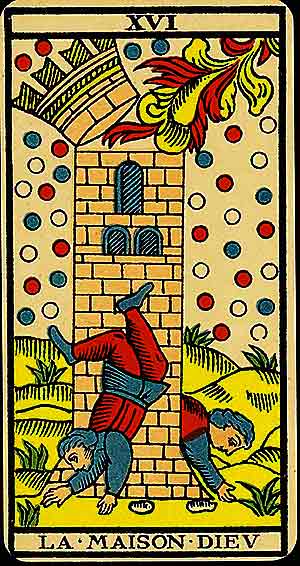 XVI – The Tower (Lost card, substituted here) |
The Future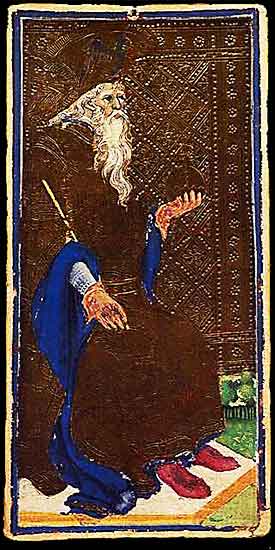 IV – The Emperor |
The Past
XVIII – The Moon
The Moon is the card of intuition, illusion, and the subconscious. It calls attention to hidden truths, dreams, and the mysterious undercurrents that govern one's emotional landscape.
Symbolism: The barefoot woman holding a crescent moon reflects the card's connection to the primal, intuitive side of the psyche. Her gaze towards the sky suggests an awareness of the mysteries beyond the surface of reality. The wild, untamed landscape beneath her speaks to the untapped and often misunderstood forces of the unconscious mind. The golden background heightens the mystical quality, suggesting the moonlight reveals hidden paths.
In Relationships: The Moon indicates that not everything is as it seems in your romantic life. Trust your intuition, but also be cautious of illusions or deceptions.
In Work: Hidden factors or unclear circumstances may influence your professional life. The Moon calls for careful introspection and a deeper understanding of the forces at play.
Spiritually: This card calls for exploring the subconscious and trusting your intuitive wisdom. There may be deep truths that need to be uncovered.
When ill-dignified: Confusion, illusion, or deception. This warns of misunderstandings or hidden motives that could lead to emotional instability or false perceptions.
The Present
XVI – The Tower (Lost card, substituted here)
This card no longer exists, so the Marseille version is filling in. The Tower symbolises upheaval, sudden change, and the destruction of false structures. It heralds moments of revelation that, while shocking, clear the way for growth and truth.
Symbolism: The lightning bolt represents divine intervention shattering illusions and falsehoods. The crumbling tower signifies the collapse of unstable foundations. The falling figures illustrate vulnerability and the inevitability of change, while the broken shield reflects the fragility of ego and human constructs. Despite the chaos, the background suggests this upheaval is necessary for enlightenment.
In Relationships: The Tower signals a sudden shake-up, possibly a breakup or revelation. Though painful, it clears the way for honesty and authenticity.
In Work: Expect abrupt changes, such as a job loss or major restructuring. Though unsettling, this card pushes you to re-evaluate your priorities and rebuild stronger foundations.
Spiritually: The Tower challenges false beliefs and spiritual stagnation. A moment of crisis will lead to profound insight and transformation.
When ill-dignified: When reversed or ill-dignified, the Tower suggests avoiding necessary change, delaying the inevitable, or clinging to a crumbling situation. It warns that resisting transformation can lead to prolonged suffering.
The Future
IV – The Emperor
The Emperor symbolises structure, authority, and stability. He represents the power of rules and order to create security and success, though sometimes at the expense of flexibility.
Symbolism: Seated upright with a sceptre and orb, the Emperor exudes control and dominion. His luxurious robes and the golden background emphasise his regal and unshakable power. His stillness reflects his role as a protector of order and enforcer of discipline.
In Relationships: A relationship built on structure and commitment. It can suggest the presence of a protective partner or the need to establish boundaries.
In Work: Leadership, organisation, and discipline are essential for achieving success. The Emperor encourages taking control and assuming responsibility.
Spiritually: The Emperor teaches the importance of structure and discipline in spiritual practice, encouraging grounded growth.
When ill-dignified: Tyranny, rigidity, or abuse of power. It warns against controlling behaviours or excessive adherence to rules.