
Single-Card Tarot Reading with the Book of Thoth Deck (with Optional Continuation)

Difficulty: Easiest
The one card tarot reading is best for times when focusing on just one thing without any potential complications is desirable. It can be used for just about any question, including to draw a card of the day, week, or even one's card of ultimate destiny. It can also be used repetitively, as some readers prefer to pull one card at a time, watching as a story unfolds. There are even some readers who don't use tarot spreads at all, relying on this method alone.
Your One-Card (at a time) Reading
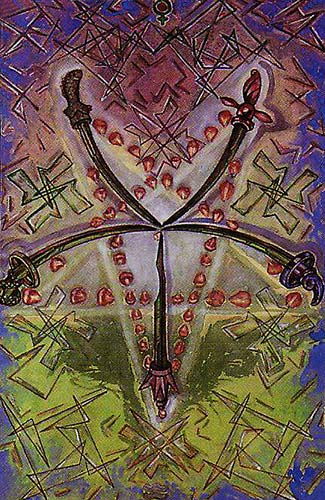
Draw #1 — Five of Swords (Defeat)
Astrological Correspondence: Venus in Aquarius
The Five of Swords represents the complexities of conflict, often showing the aftermath of a battle where the victor is left with a hollow triumph. The card features five swords arranged in a dynamic, chaotic pattern, with broken blades and a sense of turbulence. This design symbolises the intellectual or mental anguish that follows a destructive confrontation.
The Venus in Aquarius influence adds a layer of detachment and the coldness of rationality, as victory here may come at the cost of relationships or the integrity of one's ideals. The imagery implies that the battle was fought without true understanding or empathy, and any success gained feels unfulfilling.
This card is a cautionary message about the nature of conflict and the price of victory. It encourages reflection on whether the victory is worth the emotional toll and whether the ego-driven approach has led to isolation. It warns of the potential for self-deception, where the illusion of winning overshadows the deeper consequences of discord. The Five of Swords highlights the danger of intellectual arrogance, encouraging a re-evaluation of motivations and the long-term effects of strife.
In Relationships: In a romantic context, the Five of Swords can indicate conflict, betrayal, or disagreements that may lead to emotional hurt. The card suggests that intellectual or verbal battles have damaged the relationship or one person has 'won' at the expense of another. It can signify a need for resolution and forgiveness, or the decision to exit a toxic situation.
In Work: The Five of Swords may represent a loss or failure because of conflict in the workplace. It could indicate a competitive atmosphere where you win but feel morally compromised or defeated, even if you technically 'won'. This card warns of the mental toll of rivalry and deceit.
Spiritually: The Five of Swords indicates inner conflict, where your mind is in turmoil. It suggests a time when your intellectual pursuits may have become disconnected from your higher purpose, and ego-driven struggles interfere with spiritual peace.
When ill-dignified: The Five of Swords represents destructive conflict, where your thoughts and actions are driven by ego, and victory is hollow or short-lived. It may suggest manipulation, deceit, or a situation where you have 'lost' even if you technically won. The mental energy is consumed in futile struggles, leaving you with no actual sense of fulfilment.