
The Three Pyramids Spread
Difficulty: Complicated
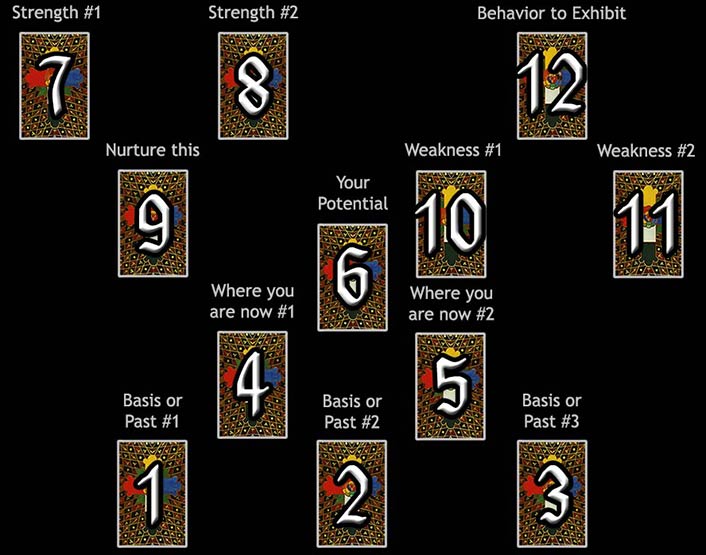
Basically, there is the main pyramid in the centre, and two smaller pyramids on each side. One is inverted.
Positions 1 & 3 represent where the reader comes from, or what has made them/shaped them on the various levels. Can be from environment, upbringing, schooling, etc. A look at the past, but with more objectivity than is usually given when using tarot cards.
Positions 4 & 5 represent who the reader is right now. May or may not make pleasant reading, but hey, this is what this is about, right?
Position 6 represents who the reader could be. Again, it might or might not look good, but a person can learn from that and change who they are accordingly. (This is a bit like how Scrooge did things in 'A Christmas Carol'.)
Positions 7 & 8 are the reader's strengths. This is the light they have, which can be bought to the forefront. What carries the person should not be hidden or unacknowledged.
Position 9 represents what should be given to oneself or created within.
Position 10 & 11 represent personal areas for development or weaknesses. Again, might not make good reading, but if someone looks at their strengths first, they will be able to see a balance is there and can choose to focus on one side or the other. This is where a person could really see how their shadow side comes into play.
Position 12 represents what the reader should be offering externally, or what they can bring to their world or to others who inhabit that world.
Your Three Pyramids Reading
Strength #1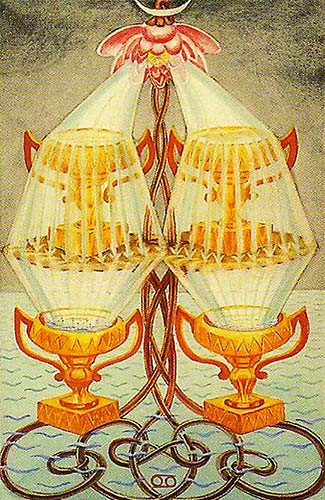 |
Strength #2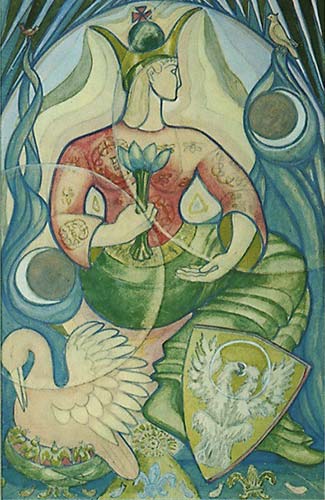 |
 |
Exhibit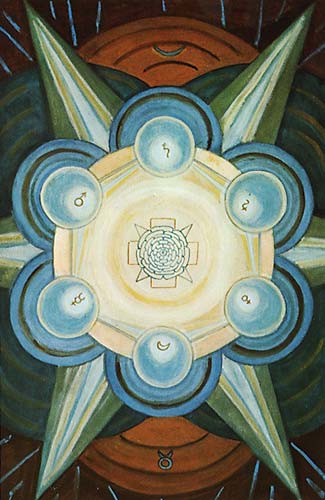 |
|||
Nurture This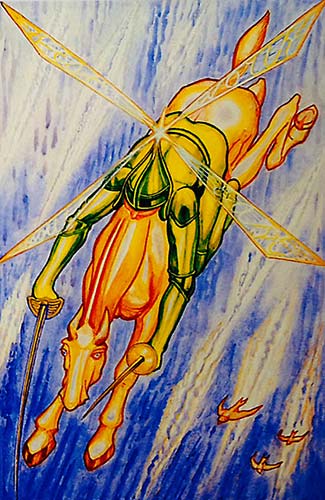 |
Potential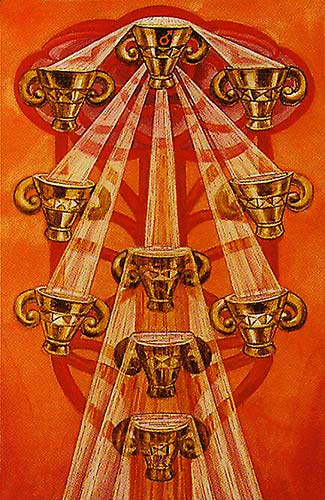 |
Infirmity #1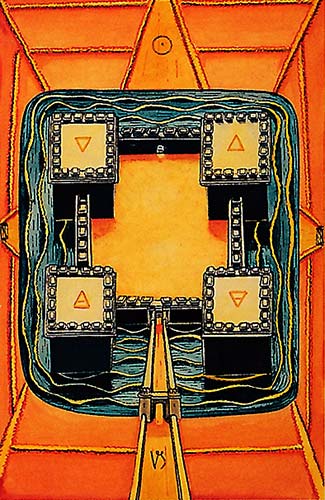 |
Infirmity #2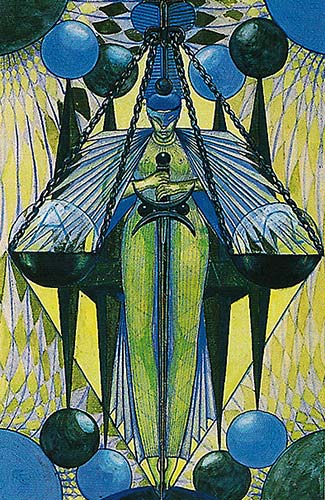 |
|||
Now #1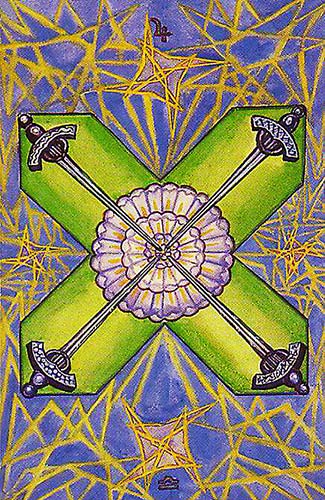 |
Now #2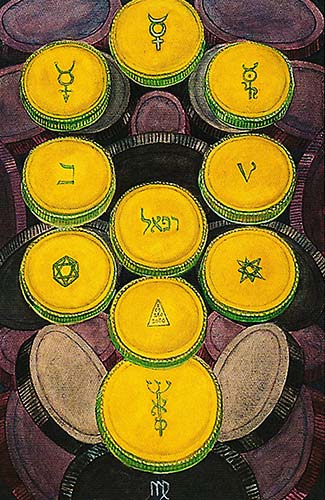 |
|||||
Base (past) #1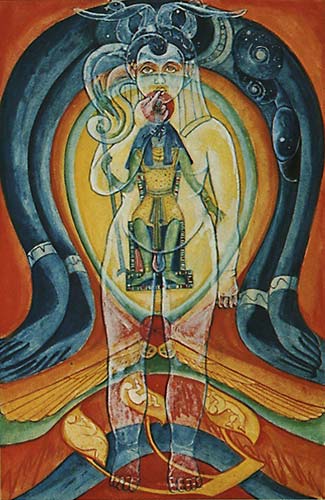 |
Base (past) #2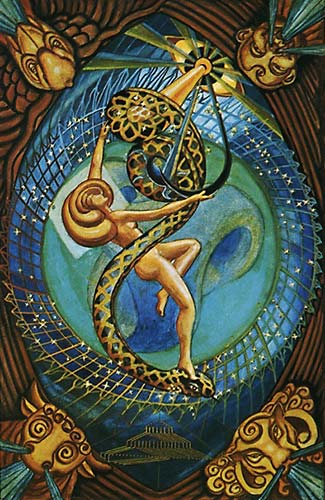 |
Base (past) #3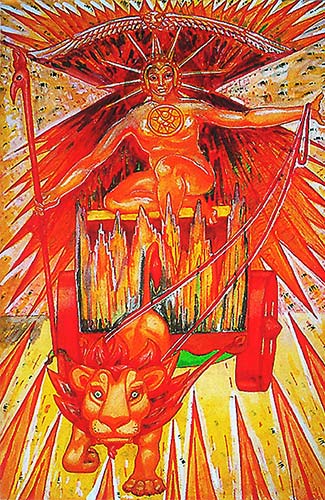 |
1: Base #1
(Judgement, Fire, Shin)
The Aeon represents transformation, evolution, and the awakening to a higher state of consciousness. Associated with Shin, the tooth, this card reflects the process of breaking through old paradigms to embrace a new spiritual era. Crowley's reinterpretation of Judgement as The Aeon emphasises rebirth on a cosmic scale, rather than individual reckoning.
The central figure is the translucent child-god Horus, representing the dawn of a new age. Above him, Nuit, the goddess of infinite space, arches across the sky, and Hadit, the fiery point of divine inspiration, burns at her core. The two incarnations of the same figure symbolise the transition from the old to the new. The vibrant reds and blues throughout the card evoke the dynamic forces of destruction and creation.
In Relationships: The Aeon signifies the potential for profound change. It suggests leaving behind outdated patterns and embracing a higher level of connection and understanding.
In Work: This card indicates a turning point, calling you to align with your true purpose and embrace transformative opportunities.
Spiritually: The Aeon symbolises awakening to a higher state of being. It calls you to release the past and step into your divine purpose with courage and clarity.
When ill-dignified: The Aeon warns of resistance to change, clinging to outdated beliefs, or fear of transformation. You are advised to trust the process of renewal and embrace the potential of the new era.
2: Base #2
(Saturn, Earth, Tau)
The Universe is the culmination of the journey, symbolising integration, completion, and the harmonious union of opposites. Associated with Tau, the cross, this card reflects the materialisation of divine will and the synthesis of all forces. Saturn, the planet of structure and discipline, anchors the card in themes of order and manifestation.
The central figure is a nude woman, symbolising the perfected self, dancing within a ring of stars, on the head of an enormous serpent. She holds tools of creation in her hands, embodying mastery over all elements. Around her, the four cherubim faces—the lion, the eagle, the man, and the bull—represent the fixed signs of the zodiac and the balance of cosmic forces, as water flows from their noses and mouths. The background represents the infinite possibilities of the universe.
In Relationships: The Universe signifies fulfilment and the realisation of harmony. It encourages you to celebrate the unity and wholeness of your connections.
In Work: This card indicates the successful completion of a cycle and the achievement of long-term goals. You are advised to reflect on your accomplishments and prepare for new horizons.
Spiritually: The Universe symbolises enlightenment, the integration of all aspects of the self, and the realisation of cosmic unity. It calls you to embrace your place within the greater whole and celebrate the infinite potential of existence.
When ill-dignified: The Universe warns of stagnation, fear of completion, or an unwillingness to move forward. You are advised to release resistance and trust in the cycles of growth and transformation.
3: Base #3
Element: Air of Fire
Astrological Correspondence: Leo
The Prince of Wands represents the intellectual and communicative aspects of Fire, where mental energy and creative passion converge. As Air of Fire, he embodies the visionary thinker who brings dynamic ideas, plans, and strategies to life with inspiration and daring. The Prince is a passionate and courageous individual, full of bold concepts and the drive to translate them into action.
This card symbolises the spirit of adventure and enterprise, where creativity is channelled into purposeful movement. It is a card of intellectual boldness, where ideas ignite like wildfire and are swiftly translated into reality. The Prince of Wands is a figure of immense energy, filled with determination and enthusiasm to take on challenges, initiating projects with great confidence. He encourages you to embrace the power of your thoughts and ambitions, and act decisively in the pursuit of your goals.
In Relationships: The Prince of Wands represents passion and excitement. This can indicate a fast-moving romance full of desire and adventure, but it can also imply someone committed to the thrill of pursuit rather than steady emotional intimacy. The Prince is often the impulsive lover, driven by the desire for adventure or novelty.
In Work: In the professional world, the Prince of Wands is an energetic and bold leader, pushing projects forward with enthusiasm and a strong sense of purpose. He represents the catalyst for action, the one who brings ideas into motion. However, this card also warns that rushing forward without a solid plan can lead to burnout or missed opportunities.
Spiritually: The Prince of Wands can indicate intellectual exploration or philosophical inquiry. You may seek ways to expand your mind, often through bold or unconventional means. The card may also represent an energetic search for truth or personal enlightenment.
When ill-dignified: The Prince of Wands can indicate mental restlessness, hasty decisions, or an excessive focus on novelty at the expense of deeper commitment. You may be easily distracted or prone to acting on impulse without thinking through the consequences. This card warns against reckless behaviour or a lack of foresight in your actions.
4: Where you are now #1
Astrological Correspondence: Jupiter in Libra
The Four of Swords represents Truce, a moment of peace after a period of mental or emotional conflict. In the Thoth imagery, the four swords converge at a central point, creating a sharp intersection over a lotus flower, symbolising balance, peace, and spiritual calm. The swords are not in active conflict but align in a way that suggests a temporary cessation of mental struggle, offering a moment for reflection and respite.
With Jupiter in Libra, this card emphasises the themes of balance, expansion, and harmonious resolution. Libra brings the need for equilibrium, and Jupiter fosters growth through peaceful cooperation. This card suggests you may find yourself in a situation where there is a pause in conflict, a moment to regain clarity and find peace within yourself before moving forward.
The Four of Swords invites you to embrace this moment of truce, allowing space for healing and reflection. The lotus flower at the centre reminds us that stillness can lead to spiritual growth and mental clarity. Though the conflict may not be resolved permanently, this pause offers an opportunity for rebalancing and gathering the strength needed for the next phase.
In Relationships: The Four of Swords can indicate a time of pause or rest. It suggests a need to take a break or step back from a situation to regain mental clarity before moving forward. It may also indicate a time of emotional healing in the relationship.
In Work: The Four of Swords suggests rest or retreat after a challenging time. It encourages you to take a mental break from stress or conflict to gain perspective and clarity before continuing. It can also indicate the need for strategic rest to re-energise and move forward with renewed focus.
Spiritually: The Four of Swords calls you to retreat and reflect. It indicates a time for meditation, contemplation, or rest to restore mental and spiritual health. The card invites you to rest from spiritual activity and allow the mind to clear, creating space for deeper insight.
When ill-dignified: The Four of Swords can indicate stagnation, withdrawal, or avoidance of necessary action. It may also suggest a refusal to rest or heal, leading to burnout or mental exhaustion. You may be using 'rest' as an excuse to avoid dealing with important issues, leading to further mental confusion or distress.
5: Where you are now #2
Astrological Correspondence: Mercury in Virgo
This card represents the culmination of material success and the realisation of long-term financial and material security. It signifies abundance, prosperity, and the foundation built through hard work, dedication, and practical wisdom.
The imagery in the Ten of Disks reflects the achievement of lasting material stability, symbolising the results of consistent effort and wise decisions over time. This card represents not only individual wealth but also the potential for collective prosperity, such as family legacy, inheritance, or generational wealth. It is the card of lasting success that extends beyond the present moment to touch future generations.
With the influence of Mercury in Virgo, the Ten of Disks emphasises the intellectual and practical considerations that lead to long-term stability, such as planning, organisation, and attention to detail. This card suggests a time of financial ease and material comfort has arrived or is within reach, brought about by the steady application of effort and wisdom. It speaks to fulfilment and satisfaction in the material realm, highlighting the fulfilment of knowing your material foundation is secure and enduring.
In Relationships: The Ten of Disks can represent stability and creating a secure, nurturing environment. It suggests a relationship grounded in shared material success and mutual support. There may be a focus on family and long-term commitment, or the building of a lasting foundation for the future. This card could also point to inheritance or the transfer of wealth, either materially or through shared wisdom.
In Work: The Ten of Disks points to the fruition of years of hard work. This is the reward for staying committed to your goals and putting in the effort to build a foundation for your future. It may signify financial success, security, and the establishment of long-term wealth. It is a card of prosperity achieved through discipline, focus, and consistency. The Ten of Disks is the ultimate card of material fulfilment and represents the completion of a cycle where the fruits of your labour are now realised.
Spiritually: The Ten of Disks suggests that true wealth comes from balancing material abundance with spiritual wisdom. It emphasises the importance of securing your material and physical needs to progress spiritually, showing that success in the material world is not separate from spiritual growth. The card calls for gratitude and wisdom in managing both your physical and spiritual resources.
When ill-dignified: The Ten of Disks may indicate a misplaced focus on material wealth at the expense of emotional, relational, or spiritual richness. It can point to overindulgence, greed, or the dangers of becoming attached to financial success or status. This card, when negatively aspected, may also highlight issues related to inheritance, family disputes, or the breakdown of long-term stability, particularly if that foundation was built upon unstable or selfish motives.
6: Your potential
Astrological Correspondence: Mars in Pisces
The Ten of Cups represents the completion of emotional cycles, where fulfilment reaches its peak yet carries the potential for stagnation or excess. The card depicts ten overflowing cups arranged in a balanced yet dynamic structure, with their contents spilling out. This imagery suggests emotional abundance but hints at the challenge of sustaining such fullness without tipping into indulgence or dissatisfaction.
Mars in Pisces combines the drive and passion of Mars with Pisces' fluid and sensitive nature. This astrological pairing emphasises the dynamic tension between the pursuit of emotional fulfilment and the need for spiritual depth and renewal. It reflects the active effort required to balance intense emotions and ensure they remain enriching rather than overwhelming.
The Ten of Cups signifies the realisation of emotional harmony and the culmination of heartfelt desires, particularly in relationships and personal connections. While it celebrates joy and completeness, it also serves as a reminder to seek new horizons once the current cycle is fulfilled, ensuring that emotional growth continues. At this stage in the Suit of Water, the cups are brimming, more than full. It implies that a continual effort to maintain this state is necessary, naturally involving a constant need to manage stress.
In Relationships: The Ten of Cups signals the culmination of passion. This card suggests emotional harmony, mutual understanding, and the successful merging of hearts. It can indicate the realisation of long-term love goals, such as marriage or family unity.
In Work: The Ten of Cups represents fulfilling professional goals that bring emotional satisfaction. It suggests a harmonious work-life balance and contentment with one's professional accomplishments, although not without stress. This is a card of success in the broader sense, where work and personal life are aligned, but it warns of the additional weight of the responsibility involved.
Spiritually: The Ten of Cups represents emotional and spiritual fulfilment, indicating you are at peace with yourself and your spiritual journey. It suggests oneness with the divine and emotional alignment with your spiritual truth.
When ill-dignified: The Ten of Cups can point to an illusion of happiness or emotional disconnection within a family or relationship. There may be unfulfilled potential or strained harmony, where superficial happiness masks deeper emotional issues or discontentment.
7: Strength #1
Astrological Correspondence: Moon in Cancer
The Four of Cups, or Luxury, represents the fulfilment and abundance that comes with emotional satisfaction and the enjoyment of what is already in one's life. It symbolises emotional contentment, where you can reflect on what has been achieved and the blessings already received.
The card features four cups arranged in a square formation, with light flowing from the top two cups down into the bottom two. This light represents the emotional flow of abundance and fulfilment, symbolising the harmonious exchange of emotions. The imagery conveys a moment of emotional reflection, where you recognise the blessings in your life and enjoy a sense of gratitude and stability. The Four of Cups invites you to acknowledge the wealth of emotional experiences and satisfaction you have gained, encouraging you to savour and appreciate the emotional contentment you have achieved.
In Relationships: The Four of Cups may indicate emotional dissatisfaction, disillusionment, or boredom in the relationship. You may be so focused on disappointments or unfulfilled desires that you do not recognise new possibilities or opportunities for emotional connection.
In Work: Professionally, this card suggests a feeling of emotional or creative stagnation. You may feel unfulfilled by your work or uninspired by your current role. There may be dissatisfaction, and you may need to seek new challenges or engage in deeper introspection to reconnect with your passion and purpose.
Spiritually: The Four of Cups suggests emotional withdrawal or spiritual apathy. You may be disconnected from your spiritual path, lost in self-doubt, or focused on past disappointments. The card invites you to open your heart to new possibilities and reconsider what might be missing in your spiritual practice.
When ill-dignified: The Four of Cups may point to a state of emotional block or closed-off behaviour. You may be emotionally repressed, unwilling to confront or process your feelings. There may be a tendency to dwell in negativity or missed opportunities, leading to a cycle of dissatisfaction that is hard to break.
8: Strength #2
(Venus, Daleth)
The Empress is a vibrant manifestation of fertility, creativity, and the nurturing power of love. Associated with Daleth, the door, she represents the gateway to abundance and the generative forces of the divine feminine. Venus, the planet of beauty and harmony, infuses her with grace, sensuality, and the power to create life and art in all forms.
The imagery of The Empress radiates lushness and vitality. She is enthroned amidst a verdant paradise, symbolising her role as the Earth Mother. Her gown flows in harmonious patterns of red, green, and gold, adorned with pomegranates—a symbol of fertility and the mysteries of creation. In her right hand, she holds a lotus flower, representing purity and spiritual unfolding. At her feet rests a shield emblazoned with an alchemical double eagle. She gazes at a dove, a symbol of the Holy Spirit, while the aura around her suggests industrious creativity and the interconnectedness of life.
In Relationships: The Empress signifies profound connection, nurturing energy, and the blossoming of relationships. She encourages you to cultivate love with patience and care, allowing it to flourish naturally.
In Work: This card indicates a fertile period for creativity and growth. You are encouraged to trust your creative instincts and nurture your projects with love and dedication, knowing abundance will follow.
Spiritually: The Empress represents the divine source of life and the sacred connection to nature. She calls you to honour your creative power and embrace the beauty and abundance within and around you.
When ill-dignified: The Empress warns of stagnation, overindulgence, or smothering tendencies. You are advised to examine whether your actions are rooted in genuine love or in a need to control and ensure you are not sacrificing yourself for others.
9: Nurture this
Element: Fire of Air
Astrological Correspondence: Gemini
The Knight of Swords represents an intense, fast-moving force of intellect and action. He charges through the air with fierce determination, embodying the quick, forceful qualities of Air in motion. The Knight's swift movement symbolises his drive to deliver ideas and messages, pushing forward with unrelenting focus and mental energy. His actions are rapid and decisive, like a whirlwind of thought and communication, sometimes chaotic in their intensity.
This card signifies the action-oriented aspect of the Air element—taking intellectual concepts and turning them into tangible actions. However, the Knight of Swords can also represent the dangers of rushing forward without considering the consequences. His speed and energy may sometimes lead to hasty decisions or the need to reconsider the path after action has already been taken.
The Knight of Swords challenges you to embrace your intellectual power and take bold action but also reminds you of the need to temper that drive with caution, ensuring your pursuit of ideas does not lead to unintentional harm or misdirection. His energy encourages directness but warns against impatience.
In Relationships: The Knight of Swords can signify sudden and forceful communication or an intellectual attraction that dominates the emotional connection. Relationships may progress rapidly, but arguments or disagreements may also mark them if the parties involved are not careful in their approach. The Knight can indicate the need for quick, clear communication, but also suggests avoiding impulsive, hurtful words.
In Work: The Knight of Swords represents a fast-paced, intellectually driven professional environment. This is a person determined to achieve success by force of will, intellect, and swift action. However, this card can indicate that you might need to slow down and consider the consequences of your actions before you rush ahead. It's easy to become caught up in the speed of success and miss important details.
Spiritually: The Knight of Swords symbolises a quest for intellectual enlightenment, often seeking truth and knowledge through sharp analysis. This card can indicate a sudden spiritual awakening or an urge to rush towards spiritual goals but also warns that the pursuit of intellectual clarity can overshadow emotional or intuitive wisdom.
When ill-dignified: The Knight of Swords indicates impulsive, reckless behaviour driven by hasty thoughts and actions. You may rush into situations without thinking them through, leading to chaos or conflict. It's important to exercise caution and avoid becoming too forceful or aggressive in pursuing goals. This card can also point to misunderstandings or cutting words that cause damage to relationships or situations.
10: Weakness #1
Astrological Correspondence: Sun in Capricorn
The Four of Disks (Power) represents the solidification and consolidation of material wealth and security. The imagery of four square disks arranged symmetrically evokes stability, emphasising the creation of a solid foundation and the control one has over their material circumstances. This card symbolises the mastery and protection of financial resources and the ability to maintain power and stability in the physical world.
The Four of Disks reflects a time when material security is established, and you are likely in a position of control over your material situation. It highlights the importance of maintaining discipline, focus, and practicality in securing one's wealth, but also warns against the potential rigidity or over-attachment to material possessions. The influence of the Sun in Capricorn encourages a steady, strategic approach to building and preserving wealth, ensuring that power and stability are achieved through responsible, enduring effort. This card represents a moment of mastery in managing one's material world.
In Relationships: The Four of Disks may signify stability and security but can also indicate possessiveness or control. It may suggest that you are focusing on maintaining the material aspects of a relationship, such as financial security, at the expense of emotional depth or freedom.
In Work: The Four of Disks suggests financial stability and control over one's material resources. It indicates success in business or career, particularly through careful management and conservation of resources. The card advises maintaining control and not taking unnecessary risks with financial matters.
Spiritually: The Four of Disks may suggest that you are focusing too much on the material or outward manifestations of spirituality and not enough on inner growth. It may be a reminder to let go of the need for control and allow more freedom and flow in your spiritual practice.
When ill-dignified: The Four of Disks represents a fixation on materialism, greed, or possessiveness. You may be too conservative with your resources, unable to let go of control. It can indicate insecurity masked by an outward appearance of power, or the inability to adapt to changing circumstances.
11: Weakness #2
(Libra, Lamed)
In the Thoth deck, the card traditionally known as Justice is renamed Adjustment, reflecting the dynamic nature of balance and the constant recalibration required to maintain harmony. Associated with Lamed, the ox-goad, it represents the guidance and discipline needed to align oneself with universal truth. Libra, the zodiac of balance and fairness, infuses the card with its themes of equity and measured judgement.
The central figure of Adjustment is a serene androgynous figure holding a sword while balancing on their toes, between a balanced pair of scales. The sword symbolises the piercing clarity of truth, while the scales represent the cosmic law of cause and effect. Their poised stance is framed by geometric patterns, emphasising precision and the mathematical order of the universe. Behind them, a brilliant green background evokes the idea of renewal and the living equilibrium of nature.
In Relationships: Adjustment highlights the importance of honesty, fairness, and mutual accountability. It encourages you to communicate openly and seek a balanced dynamic.
In Work: This card suggests success will come through careful analysis, ethical decision-making, and the ability to adapt to changing circumstances. It warns against cutting corners or ignoring the consequences of actions.
Spiritually: Adjustment signifies alignment with divine truth and the quest for inner harmony. You are called to reflect on your actions and ensure they are in alignment with your highest principles.
When ill-dignified: Adjustment warns of imbalance, dishonesty, or an inability to take responsibility for one's actions. You are advised to confront uncomfortable truths and restore equilibrium through introspection and accountability.
12: Behavior to exhibit
Astrological Correspondence: Moon in Taurus
The Six of Disks (Success) represents material success, generosity, and balanced exchange. This card indicates you are in a position of both receiving and giving in the material realm, leading to a harmonious flow of resources. The six disks represent a balanced circulation of wealth and effort, suggesting that prosperity is enjoyed and shared with others.
The Six of Disks symbolises the positive results of one's hard work and investments in the material world. It speaks to the rewards of perseverance and discipline, showing that success in material matters has reached a point where generosity and mutual benefit are possible. The influence of the Moon in Taurus highlights emotional satisfaction derived from stability and security, with an emphasis on enjoying the fruits of one's labour while maintaining a grounded, nurturing attitude towards others. This card encourages giving and receiving in equal measure, fostering balance and mutual support.
In Relationships: The Six of Disks signals a balanced, equitable partnership where both parties share responsibility and resources. This card may indicate the growth of a relationship built on mutual respect and support, where both partners invest in one another's well-being.
In Work: The Six of Disks indicates the successful completion of a project or business venture, bringing both rewards and recognition. It symbolises the ability to share success with others and suggests wealth, recognition, and stability are being achieved. It may also indicate charitable efforts or the redistribution of wealth in a way that benefits both the individual and the collective.
Spiritually: The Six of Disks represents harmony and balance between the material and spiritual realms. It suggests you are experiencing spiritual fulfilment through generosity, charity, or service. It may also suggest that your spiritual wealth is shared or passed on to others.
When ill-dignified: The Six of Disks can suggest imbalance or exploitation in material matters. You may be hoarding resources or being taken advantage of by others. This card warns against materialistic motivations or unequal relationships where one party benefits at the expense of the other.