
Decision Spread
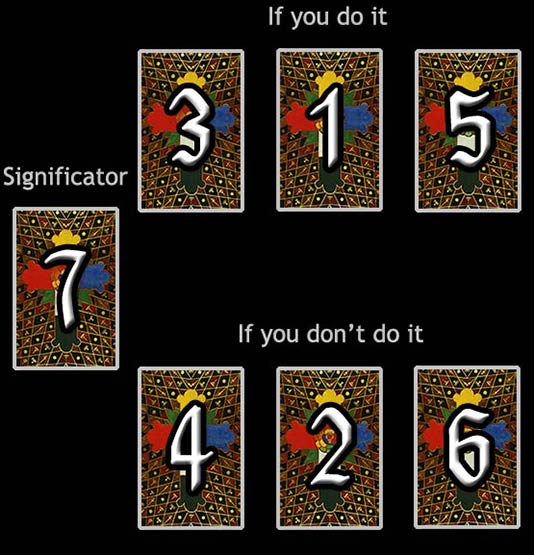
Difficulty: Easy
This simple but highly useful spread calls for a question to be asked in this format:
'What happens if I do (X), and what happens if I do not do (X)?'
Please note that it should not be viewed as a decision between two different options, but about whether a single option should be exercised or not. A second option would call for a separate reading.
Card #7 is the significator, the overall theme of the query.
Cards #3, #1, & #5 represent the chronological sequence of events that occurs if the reader chooses to do (X).
Cards #4, #2, & #6 represent the chronological sequence of events that unfolds if the reader chooses not to do (X).
Your Decision Reading
The Significator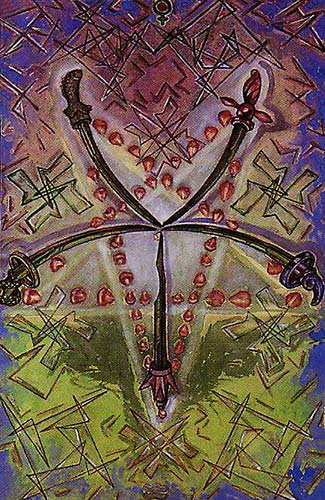 Five of Swords (Defeat) |
Outcome if you do it: | ||
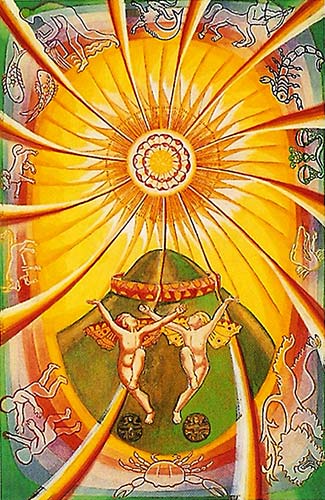 XIX – The Sun |
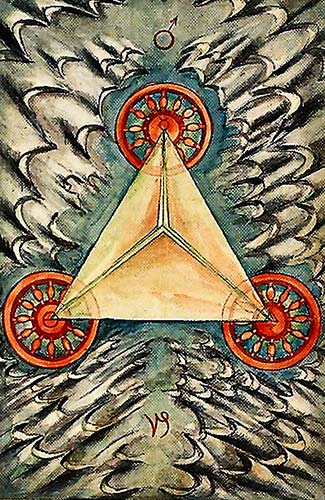 Three of Disks (Works) |
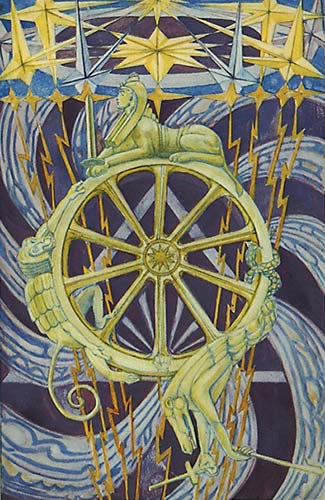 X – Fortune |
|
| Outcome if you don't do it: | |||
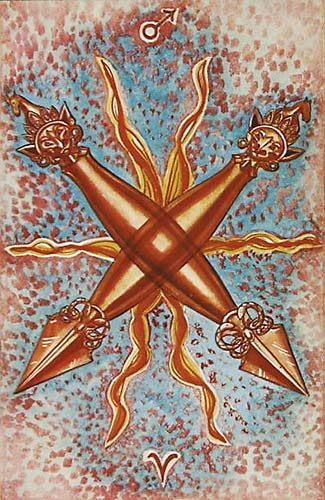 Two of Wands (Dominion) |
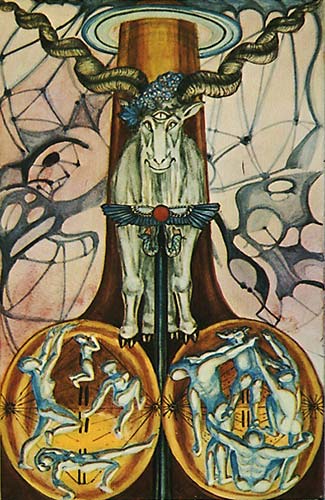 XV – The Devil |
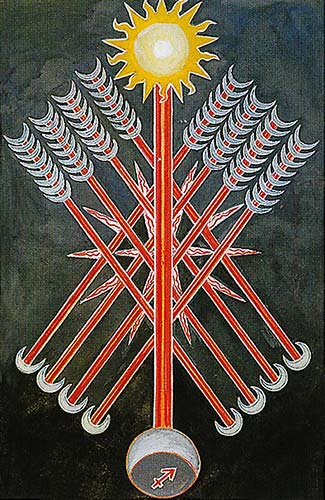 Nine of Wands (Strength) |
|
Five of Swords (Defeat)
Astrological Correspondence: Venus in Aquarius
The Five of Swords represents the complexities of conflict, often showing the aftermath of a battle where the victor is left with a hollow triumph. The card features five swords arranged in a dynamic, chaotic pattern, with broken blades and a sense of turbulence. This design symbolises the intellectual or mental anguish that follows a destructive confrontation.
The Venus in Aquarius influence adds a layer of detachment and the coldness of rationality, as victory here may come at the cost of relationships or the integrity of one's ideals. The imagery implies that the battle was fought without true understanding or empathy, and any success gained feels unfulfilling.
This card is a cautionary message about the nature of conflict and the price of victory. It encourages reflection on whether the victory is worth the emotional toll and whether the ego-driven approach has led to isolation. It warns of the potential for self-deception, where the illusion of winning overshadows the deeper consequences of discord. The Five of Swords highlights the danger of intellectual arrogance, encouraging a re-evaluation of motivations and the long-term effects of strife.
In Relationships: In a romantic context, the Five of Swords can indicate conflict, betrayal, or disagreements that may lead to emotional hurt. The card suggests that intellectual or verbal battles have damaged the relationship or one person has 'won' at the expense of another. It can signify a need for resolution and forgiveness, or the decision to exit a toxic situation.
In Work: The Five of Swords may represent a loss or failure because of conflict in the workplace. It could indicate a competitive atmosphere where you win but feel morally compromised or defeated, even if you technically 'won'. This card warns of the mental toll of rivalry and deceit.
Spiritually: The Five of Swords indicates inner conflict, where your mind is in turmoil. It suggests a time when your intellectual pursuits may have become disconnected from your higher purpose, and ego-driven struggles interfere with spiritual peace.
When ill-dignified: The Five of Swords represents destructive conflict, where your thoughts and actions are driven by ego, and victory is hollow or short-lived. It may suggest manipulation, deceit, or a situation where you have 'lost' even if you technically won. The mental energy is consumed in futile struggles, leaving you with no actual sense of fulfilment.
Outcome if you do it:
XIX – The Sun
(Sun, Resh)
The Sun radiates with the energy of vitality, clarity, and triumphant renewal. Associated with Resh, the face, this card symbolises self-awareness, illumination, and the expression of the inner light. The Sun, as the central celestial body, embodies life, growth, and divine purpose.
The imagery is vibrant and joyous, as the golden sun blazes in the sky, surrounded by rays of light that fill the scene with warmth and illumination. Beneath it, twin children dance in a fertile landscape, representing innocence, harmony, and the unification of opposites. The background is lush with fields and flowers, a testament to the creative and nurturing power of the sun's energy. The card radiates an undeniable sense of triumph and clarity.
In Relationships: The Sun signifies joy, harmony, and mutual understanding. It brings light to connections, encouraging open communication and the sharing of love without reservation.
In Work: This card represents achievement and the realisation of goals. You are advised to embrace your success and lead confidently.
Spiritually: The Sun symbolises enlightenment, integrating the self, and realising your divine purpose. It calls you to step into your power and radiate your truth confidently.
When ill-dignified: The Sun warns of arrogance, egotism, or overexposure. You are advised to balance your confidence with humility and guard against burning out your energy.
Three of Disks (Works)
Astrological Correspondence: Mars in Capricorn
This card represents the creative energy of the material world. It symbolises the early stages of a project or endeavour, where solid foundations are laid, and the initial success of turning a vision into reality. The imagery emphasises the act of building, forming, and creating, illustrating the groundwork being established for something that has the potential to grow into a larger, more successful manifestation.
The Three of Disks suggests you are involved in a process of construction, whether literal or metaphorical, and are seeing the fruits of your effort begin to take shape. This card highlights the importance of persistence, collaboration, and focusing on the practical aspects of bringing ideas to fruition. The influence of Mars in Capricorn signifies a concerted effort towards tangible results, urging you to continue applying hard work and determination to ensure the success of your endeavours. It encourages building upon existing foundations to create something lasting.
In Relationships: The Three of Disks suggests teamwork and the collaborative effort needed to make a relationship successful. It could indicate working with a partner to build a future or invest in shared goals. This card is a positive omen for relationships built on mutual effort and shared practical goals.
In Work: In professional matters, the Three of Disks indicates the productive stage of a project or business venture when early results show promise. It suggests the need for attention to detail and teamwork. This card is a signal of success through hard work and collaboration.
Spiritually: The Three of Disks represents the work required to build a solid foundation in one's spiritual practice. The card suggests that spiritual growth will be attained through dedication, practice, and attention to detail. It may also symbolise integrating spiritual teachings into everyday life, creating a balanced and fruitful path.
When ill-dignified: The Three of Disks can indicate a lack of progress or failure to put in the work to achieve success. It may suggest that efforts are disjointed, uncoordinated, or poorly executed, and can represent dissatisfaction or frustration with the material aspects of a project.
X – Fortune
(Jupiter, Kaph)
Fortune represents the ever-turning wheel of fate, symbolising the cycles of change and the opportunities that arise through the interplay of forces. Associated with Kaph, the palm of the hand, this card signifies the ability to grasp the turning tides of fortune and shape one's destiny. Jupiter, the planet of expansion and abundance, imbues the card with optimism and growth.
The Wheel of Fortune is depicted as a cosmic mechanism, a rotating mandala of symbols and figures. At its centre is the ten-spoked wheel, representing the cyclical nature of existence and integration of opposites. Around it spin the Sphinx, the serpent, and the baboon, embodying stability, transformation, and the playful chaos of change. The wheel is connected to its spiritual counterpart above, signifying the promise of renewal and the unity of all things within the cosmic dance.
In Relationships: Fortune suggests change and new opportunities. It encourages you to embrace the unpredictable nature of love and remain open to its possibilities.
In Work: This card signifies a turning point and the potential for unexpected success. You are advised to seize opportunities and trust in the benevolent forces of change.
Spiritually: Fortune represents the acceptance of life's cycles and the wisdom gained through change. It calls you to embrace the flow of the universe and find peace in its rhythms.
When ill-dignified: Fortune warns of resistance to change, missed opportunities, or the chaotic forces of upheaval. You are advised to trust in the process of transformation and remain adaptable in the face of uncertainty.
Outcome if you do not do it:
Two of Wands (Dominion)
Astrological Correspondence: Mars in Aries
The Two of Wands, subtitled Dominion, represents the fiery energy of Mars in Aries. It symbolises the dynamic assertion of will, confidence, and the power to take control. The card depicts two crossed wands, each topped with ram heads, symbolising Aries' fiery, pioneering energy. Flames emanate from the wands, emphasising the active, forceful nature of this card. This card is about asserting dominance and taking decisive action. It reflects an intense drive to establish control over one's environment and push forward boldly. It is a card of raw, active energy, demanding focus and determination.
In Relationships: The Two of Wands indicates the need to make decisions about the future of a relationship. It represents contemplating the potential paths ahead, whether to deepen the connection or to explore new opportunities.
In Work: This card signifies a choice or decision that must be made regarding one's professional life or creative pursuits. You are encouraged to look beyond the immediate horizon and assess which path will bring the greatest fulfilment.
Spiritually: The Two of Wands symbolises the crossroads of spiritual growth. It suggests a time of decision, where you must choose the direction you will take on your spiritual journey.
When ill-dignified: The Two of Wands may indicate indecision, stagnation, or a lack of commitment. You might be overwhelmed by choices or hesitant to take action. It advises you to focus and take decisive steps to move forward.
XV – The Devil
(Capricorn, Ayin)
The Devil symbolises bondage, materialism, and the potent, often misunderstood forces of desire and instinct. Associated with Ayin, the eye, this card invites a piercing vision into the illusions and structures that bind us. Capricorn, the zodiac of ambition and discipline, infuses the card with themes of mastery over material and earthly limitations.
The central figure is a goat before a phallic structure, symbolising generative power and material dominance. This card is seething with esoteric symbols of competition within a person. The background, webbed in deep, earthy tones, suggests the shadowy nature of the forces at play. The card is alive with energy, hinting at temptation and the potential for liberation.
In Relationships: The Devil represents intense, often obsessive attraction. It can warn of relationships rooted in control or dependency, urging you to assess whether your connections are serving your growth.
In Work: This card suggests material success, often achieved through relentless ambition. However, it warns of becoming enslaved by wealth or status and advises balancing ambition with higher values.
Spiritually: The Devil symbolises the necessity of confronting and integrating one's shadow self. It calls you to transcend material attachments and awaken to higher truths.
When ill-dignified: The Devil warns of oppression, excessive materialism, or destructive desires. You are advised to liberate yourself by recognising and overcoming illusions and self-imposed limitations.
Nine of Wands (Strength)
Astrological Correspondence: Moon in Sagittarius
The Nine of Wands represents resilience, inner strength, and the perseverance needed to overcome challenges. This card features nine wands arranged in a structured yet dynamic pattern, radiating energy and determination. The Moon brings intuition, emotional depth, and adaptability, while Sagittarius contributes an optimistic and expansive drive, resulting in a card that embodies enduring strength amidst adversity.
This card signifies the ability to push forward despite difficulties, maintaining resolve and focus even when the path is arduous. It reflects the culmination of effort, where one has faced many battles and emerged stronger, though perhaps weary. The Nine of Wands encourages you to trust your instincts, remain vigilant, and protect what you have worked hard to achieve. It is a reminder that the final stretch of a challenge requires courage and unwavering determination.
In Relationships: The Nine of Wands represents a period where you may feel guarded or defensive because of experiences. It suggests a time of emotional resilience, where you are protecting the relationship or your heart but still willing to continue fighting for love.
In Work: This card indicates that you have faced many obstacles in your career or pursuits and are now standing strong, prepared to face any further challenges. It calls for perseverance and the belief that you can overcome any remaining difficulties.
Spiritually: The Nine of Wands speaks to spiritual endurance. You may have gone through difficult periods in your spiritual path but have come out stronger. This card encourages you to remain vigilant and steady as you continue your journey.
When ill-dignified: The Nine of Wands can indicate weariness, defensiveness, or being overwhelmed. You may feel like giving up or be too focused on old wounds to move forward. It warns against becoming too rigid or entrenched in past difficulties.