
Game Plan Spread
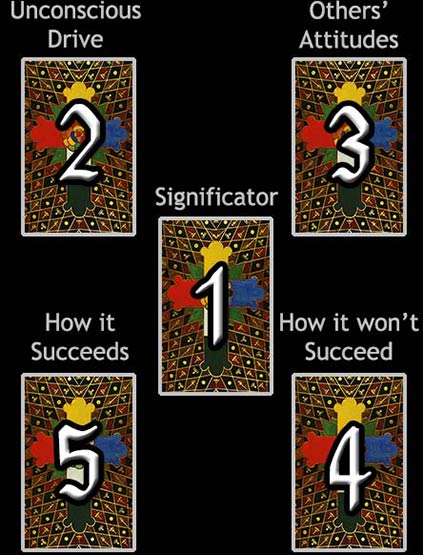
Difficulty: Easy
When a person has a certain plan in mind, this simple five-card spread presents a choice, hinting at what action or attitude should be taken for their plan to succeed, and what should be avoided to help the plan work out for the best.
The initial card is laid in the centre of the layout, the significator. The following four cards are laid out clockwise around the significator.
In this spread, the second card is about what drives the reader, but also says they are not fully conscious of this, perhaps even completely unaware of it. It provides a hint as to the reason they strive for their goal.
The third card uncovers what others think of the reader and their goals. The reader may or may not be aware of this. Sometimes other people factor into the plans (and sometimes they don't).
The fourth card suggests what not to do. If things are permitted to go down this path, the plan will collapse.
The fifth card is a hint as to how to make this plan work out favourably. The idea this card presents should be followed to make the plan successful. It is the differences between Cards #4 & #5 that should be noted, as the differences provide important clues.
Your Game Plan Reading
Unconscious Drive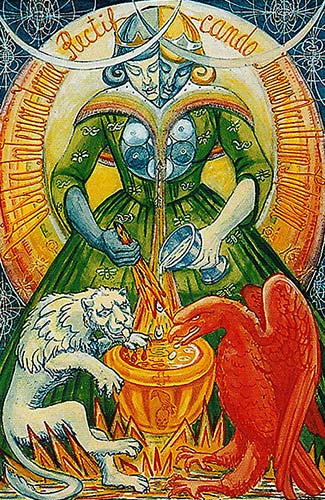 XIV – Art |
External Influences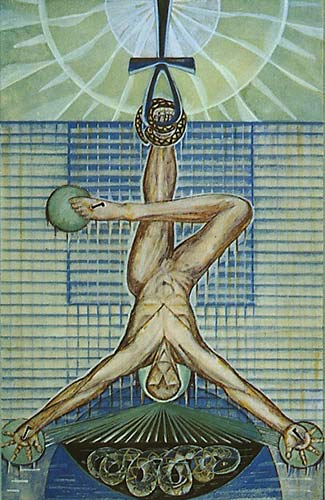 XII – The Hanged Man |
|
Significator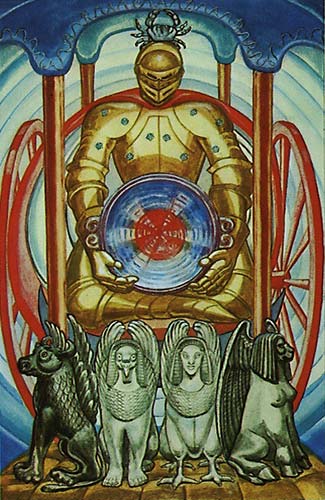 VII – The Chariot |
||
How it Will Succeed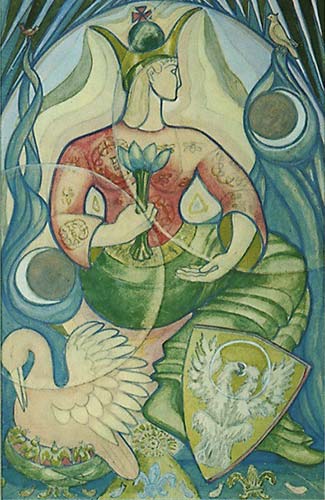 III – The Empress |
How it Will Not Succeed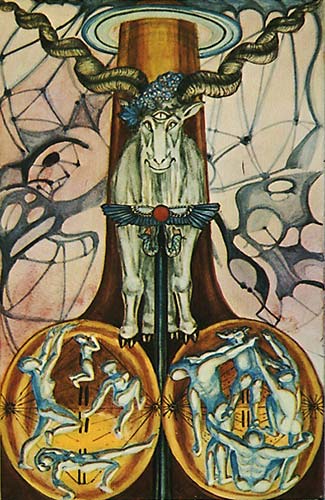 XV – The Devil |
VII – The Chariot
(Cancer, Cheth)
The Chariot represents triumph through willpower, discipline, and the unification of opposing forces. Associated with Cheth, the fence, it symbolises both protection and the boundaries that define and direct progress. Cancer, the zodiac sign of emotional depth and intuition lends the card its nurturing energy, ensuring that strength is tempered with compassion.
The Charioteer is a figure of regal composure, encased in golden armour and standing within a shell-like chariot. This shell evokes the protective qualities of Cancer, while the armour signifies spiritual and emotional fortitude. In his hands, he holds the Holy Grail, a symbol of divine purpose and spiritual attainment. The four sphinxes that draw the chariot—two white and two dark—represent the dual forces of light and darkness, which the Charioteer must master to move forward. The canopy above him is adorned with stars, linking his journey to celestial guidance and higher aspirations.
In Relationships: The Chariot indicates a relationship that requires balance and mutual effort to succeed. It suggests overcoming obstacles through shared determination and a focus on common goals.
In Work: This card signifies victory achieved through discipline, focus, and the ability to steer conflicting forces towards a unified purpose. You are encouraged to remain steadfast and clear in your intentions.
Spiritually: The Chariot represents the journey of the soul towards higher awareness, guided by the alignment of will and intuition. It calls you to embrace your inner strength and move forward confidently.
When ill-dignified: The Chariot warns of a loss of direction, internal conflict, or reckless ambition. You are advised to reassess your goals and ensure you are not being led astray by conflicting desires or external pressures.
XIV – Art
(Sagittarius, Samekh)
Art, traditionally called Temperance, represents the alchemical process of transmutation and the blending of opposites. Associated with Samekh, the prop, this card signifies the support and structure needed to integrate seemingly opposing forces. Sagittarius, the zodiac of exploration and synthesis, infuses the card with visionary energy and optimism.
The central figure is a radiant androgynous being with two faces engaged in an alchemical act of union. They pour liquid from one vessel into another, blending fire and water, symbolising the merging of opposites to create something entirely new. Around them, symbols of the zodiac and alchemical glyphs emphasise the universal nature of this process. The golden background radiates the light of inspiration and higher purpose, while the stream of power arching above the pot signifies hope and divine harmony.
In Relationships: Art represents the balance and integration of differences. It encourages you to find harmony through patience, communication, and mutual understanding.
In Work: This card signifies success achieved through creativity, innovation, and the ability to blend diverse elements into a unified whole. You are advised to embrace flexibility and trust in your creative process.
Spiritually: Art symbolises the quest for inner balance and the alchemical transformation of the self. It calls you to embrace your contradictions and to unite yourself in service of a higher purpose.
When ill-dignified: Art warns of imbalance, lack of focus, or the inability to harmonise opposing forces. You are advised to recalibrate and approach your challenges with patience and creativity.
XII – The Hanged Man
(Water, Mem)
The Hanged Man represents surrender, transformation, and the wisdom gained through self-sacrifice. Associated with Mem, the waters, this card embodies the flow of unconscious depths and the mysteries that lie beyond the material world. It is not a card of suffering but one of enlightenment through letting go.
The central figure is suspended upside-down, forming a cross with his legs, a symbol of balance and sacrifice. His arms form a triangle, evoking the union of spirit and matter. Behind him, the swirling blue-green background suggests the ocean of the subconscious. The serene expression on his face reflects the tranquillity found in surrendering to a greater truth. Around him, rays of light emanate, signifying the revelation that arises from this state of suspension.
In Relationships: The Hanged Man suggests a need for patience, selflessness, and understanding. It encourages you to see things from your partner's perspective and release control.
In Work: This card indicates a period of pause or sacrifice, where immediate goals may need to be set aside for long-term growth. You are advised to trust in the process and focus on the bigger picture.
Spiritually: The Hanged Man symbolises enlightenment achieved through surrender and the release of ego. It calls you to embrace the transformative power of stillness and contemplation.
When ill-dignified: The Hanged Man warns of stagnation, resistance to change, or clinging to outdated beliefs. You are advised to let go of what no longer serves you and embrace the wisdom of surrender.
XV – The Devil
(Capricorn, Ayin)
The Devil symbolises bondage, materialism, and the potent, often misunderstood forces of desire and instinct. Associated with Ayin, the eye, this card invites a piercing vision into the illusions and structures that bind us. Capricorn, the zodiac of ambition and discipline, infuses the card with themes of mastery over material and earthly limitations.
The central figure is a goat before a phallic structure, symbolising generative power and material dominance. This card is seething with esoteric symbols of competition within a person. The background, webbed in deep, earthy tones, suggests the shadowy nature of the forces at play. The card is alive with energy, hinting at temptation and the potential for liberation.
In Relationships: The Devil represents intense, often obsessive attraction. It can warn of relationships rooted in control or dependency, urging you to assess whether your connections are serving your growth.
In Work: This card suggests material success, often achieved through relentless ambition. However, it warns of becoming enslaved by wealth or status and advises balancing ambition with higher values.
Spiritually: The Devil symbolises the necessity of confronting and integrating one's shadow self. It calls you to transcend material attachments and awaken to higher truths.
When ill-dignified: The Devil warns of oppression, excessive materialism, or destructive desires. You are advised to liberate yourself by recognising and overcoming illusions and self-imposed limitations.
III – The Empress
(Venus, Daleth)
The Empress is a vibrant manifestation of fertility, creativity, and the nurturing power of love. Associated with Daleth, the door, she represents the gateway to abundance and the generative forces of the divine feminine. Venus, the planet of beauty and harmony, infuses her with grace, sensuality, and the power to create life and art in all forms.
The imagery of The Empress radiates lushness and vitality. She is enthroned amidst a verdant paradise, symbolising her role as the Earth Mother. Her gown flows in harmonious patterns of red, green, and gold, adorned with pomegranates—a symbol of fertility and the mysteries of creation. In her right hand, she holds a lotus flower, representing purity and spiritual unfolding. At her feet rests a shield emblazoned with an alchemical double eagle. She gazes at a dove, a symbol of the Holy Spirit, while the aura around her suggests industrious creativity and the interconnectedness of life.
In Relationships: The Empress signifies profound connection, nurturing energy, and the blossoming of relationships. She encourages you to cultivate love with patience and care, allowing it to flourish naturally.
In Work: This card indicates a fertile period for creativity and growth. You are encouraged to trust your creative instincts and nurture your projects with love and dedication, knowing abundance will follow.
Spiritually: The Empress represents the divine source of life and the sacred connection to nature. She calls you to honour your creative power and embrace the beauty and abundance within and around you.
When ill-dignified: The Empress warns of stagnation, overindulgence, or smothering tendencies. You are advised to examine whether your actions are rooted in genuine love or in a need to control and ensure you are not sacrificing yourself for others.