
Game Plan Spread
Difficulty: Easy
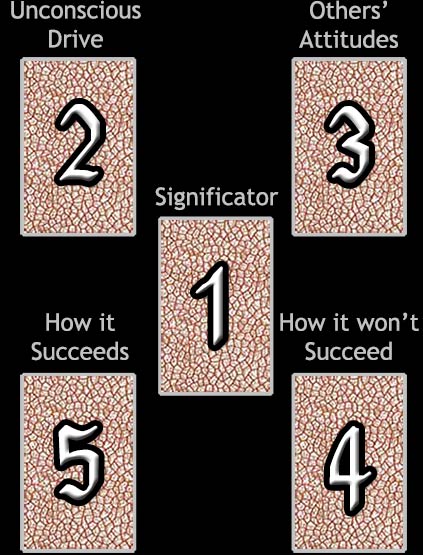
When a person has a certain plan in mind, this simple five-card spread presents a choice, hinting at what action or attitude should be taken for their plan to succeed, and what should be avoided to help the plan work out for the best.
The initial card is laid in the centre of the layout, the significator. The following four cards are laid out clockwise around the significator.
In this spread, the second card is about what drives the reader, but also says they are not fully conscious of this, perhaps even completely unaware of it. It provides a hint as to the reason they strive for their goal.
The third card uncovers what others think of the reader and their goals. The reader may or may not be aware of this. Sometimes other people factor into the plans (and sometimes they don't).
The fourth card suggests what not to do. If things are permitted to go down this path, the plan will collapse.
The fifth card is a hint as to how to make this plan work out favourably. The idea this card presents should be followed to make the plan successful. It is the differences between Cards #4 & #5 that should be noted, as the differences provide important clues.
Your Game Plan Reading
Unconscious Drive Three of Swords, Reversed |
External Influences Six of Wands |
|
Significator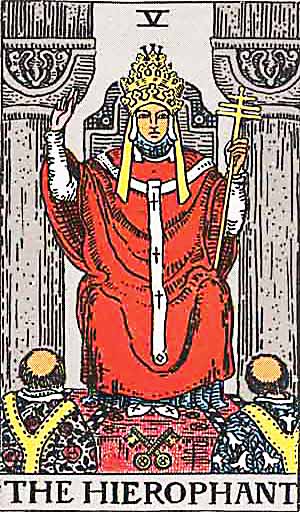 V – The Hierophant, Reversed | ||
How it Will Succeed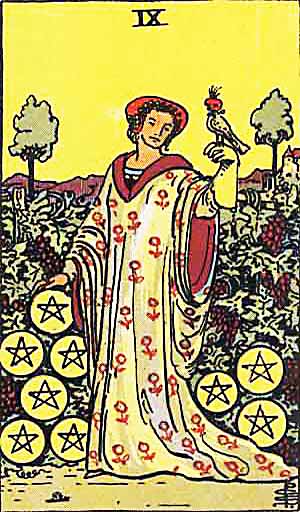 Nine of Pentacles, Reversed |
How it Will Not Succeed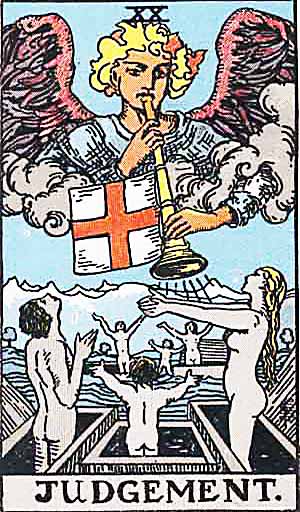 XX – Judgement, Reversed |
V – The Hierophant, Reversed The Hierophant represents tradition, spiritual guidance, conformity, and the pursuit of higher knowledge. It embodies the connection between the material and the spiritual worlds, serving as a bridge between earthly concerns and divine wisdom. The Hierophant, a spiritual leader sits between two pillars, symbolising the balance between different belief systems or realms of existence. He holds a sceptre and makes a gesture of blessing, representing his role as a guide to spiritual enlightenment and as an authority on sacred teachings.
Reversed, the Hierophant can indicate a rejection of traditional values, questioning established belief systems, or feeling trapped by convention. It may suggest that you are struggling with the pressure to conform or feeling disconnected from a spiritual or moral framework. This card reversed encourages you to explore new ways of thinking and seek personal truth, even if it goes against societal norms or expectations. It also suggests the need to break free from dogmatic thinking and find spiritual guidance that resonates with you.
In Relationships: The Hierophant speaks to the importance of tradition, commitment, and spiritual alignment. It may indicate that you seek a relationship grounded in shared values, moral beliefs, or spiritual practices. This card may also suggest the need to commit to a relationship in a formal or traditional manner, such as marriage, or to honour the teachings that come from longstanding cultural or familial expectations. The Hierophant reminds us that relationships can thrive with mutual respect, understanding, and adherence to shared principles.
In Work: The Hierophant suggests you may need to follow a structured path or seek guidance from an established authority in your field. It may mean that success can be achieved through conformity to established norms, practices, and systems. This card encourages you to pursue your professional goals with discipline and a respect for tradition, while also considering mentorship or further education to deepen your knowledge. The Hierophant may also point to a career in teaching, counselling, or religious or spiritual fields, where the transfer of knowledge is central.
Spiritually: The Hierophant represents the pursuit of spiritual knowledge through structured systems, such as religion, philosophy, or spiritual teachings. This card invites you to seek wisdom from established sources through sacred texts, a religious leader, or a disciplined spiritual practice. The Hierophant suggests the path to enlightenment can be found by following tradition, honouring teachings, and connecting to a community of like-minded individuals. It also emphasises the importance of faith, devotion, and moral integrity on the spiritual path.
Three of Swords, Reversed
The Three of Swords represents heartbreak, emotional pain, and sorrow. This card is often associated with feelings of grief, loss, or betrayal, particularly in relationships. It signifies the piercing of the heart by harsh truths or painful experiences, such as the end of a relationship, a betrayal by a loved one, or a difficult emotional revelation. The image of three swords piercing a heart symbolises the depth of the pain, yet it also suggests healing is possible after the storm. This card is a reminder that emotional suffering, though painful, is often a part of the human experience and can lead to growth and the eventual release of old wounds.
Reversed, the Three of Swords can indicate lingering emotional pain, but it may also signify the beginning of the healing process. The reversal suggests you are letting go of past hurts, although the healing may still be in progress. The Three of Swords reversed can also indicate an avoidance of dealing with emotional pain, suggesting that you may be repressing your feelings rather than allowing yourself to grieve. This card reversed invites you to confront unresolved pain to heal and release old emotional wounds. It may also signal that the worst has passed, and recovery is underway.
In Relationships: The Three of Swords signifies emotional heartache, often due to betrayal, separation, or miscommunication. This card may indicate a breakup, an affair, or a painful realisation about a relationship. You may be experiencing sorrow from an old relationship or facing current heartbreak. The Three of Swords encourages you to allow yourself to grieve and acknowledge your emotions, knowing that healing is a process. This card reminds you that you deserve love that is honest, supportive, and nurturing. Though difficult, the Three of Swords offers a moment of introspection where you can learn from experiences and prepare for emotional renewal.
In Work: The Three of Swords suggests emotional pain. This could be a situation of betrayal or disappointment, such as being passed over for a promotion, dealing with workplace conflict, or facing a setback in a project or business venture. The Three of Swords advises you to confront the emotions that come with professional disappointments, recognising that, though painful, these experiences can lead to personal and professional growth. It also emphasises the need to heal and move on from situations that no longer align with your values or goals. The card may also indicate that it is time to get out of a toxic work environment and focus on self-care and emotional recovery.
Spiritually: The Three of Swords represents healing after emotional pain or trauma. This card suggests you may be struggling with spiritual or emotional wounds, possibly stemming from experiences, betrayals, or disappointments. The Three of Swords encourages you to acknowledge the pain and allow it to guide you towards greater wisdom and self-awareness. This card reminds you that healing is necessary for spiritual growth and that confronting your emotional wounds leads to greater inner strength and resilience. The Three of Swords also calls on you to release any spiritual or emotional baggage preventing you from going forward.
Six of Wands
The Six of Wands represents victory, recognition, and public acclaim. The sixth card in the Suit of Wands signifies a time of achievement and rewards from overcoming challenges. Depicted as a figure riding a horse, holding a wreath of victory while others cheer from the sidelines, the Six of Wands symbolises triumph, success, and recognition for hard work. This card signifies acknowledgment of one's efforts by peers, colleagues, or the wider community. The Six of Wands speaks to both internal pride and external validation, encouraging you to take a moment to celebrate your accomplishments.
This card reflects a time when you have reached a milestone or completed a significant project, and now you are enjoying the recognition and admiration of others. The Six of Wands suggests your efforts have been noticed, and you are basking in the glow of your success. It encourages confidence and celebrates the idea that you are on the right track, and your achievements reflect your determination and skill. While the card heralds victory, it also reminds you to remain humble and share your success with those who have supported you along the way.
In Relationships: The Six of Wands indicates a successful time. It suggests the couple is being recognised for their unity, and their love is flourishing. This card can represent celebration in love, such as an engagement, a wedding, or a deepening of commitment. It speaks to a time when the relationship feels supported by both partners and their communities. For those who are single, the Six of Wands may suggest that you will soon find success in your romantic endeavours, whether through attracting a new partner or gaining the recognition you deserve in love. This card encourages self-confidence, showing you are ready for a rewarding romantic experience.
In Work: The Six of Wands is a sign of achievement, victory, and recognition. It indicates that you have completed a project or reached an important professional milestone. This card celebrates your dedication, skill, and leadership, along with the acknowledgment you will receive from others for your hard work. It may indicate receiving a promotion, a job offer, or public recognition for your contributions. The Six of Wands encourages you to take pride in your success and enjoy the validation that comes with it, while also reminding you to stay grounded and humble. This card also suggests your career is on an upward trajectory, and your efforts are being noticed by the right people.
Spiritually: The Six of Wands signifies a time of spiritual victory and personal growth. You may feel accomplishment in your spiritual journey, having overcome a difficult phase, or gain deeper insight. This card suggests your spiritual practices are yielding positive results and that you are being acknowledged for your dedication. It also indicates confidence and alignment with your higher self, allowing you to share your wisdom and experiences with others. The Six of Wands encourages you to take pride in your spiritual journey while remaining humble and open to continued growth. It suggests you are on the right path and that your spiritual victories are worth celebrating.
XX – Judgement, Reversed
Judgement represents self-reflection, transformation, and the call to a higher purpose. The twentieth card of the Major Arcana signifies a time of awakening, a moment of reckoning where you are invited to confront your actions, decisions, and beliefs. An angel blowing a trumpet with people rising from their graves to meet their divine call symbolises the opportunity for a fresh start or renewal through self-assessment and spiritual awakening. This card encourages you to reflect on your life, learn from mistakes, and answer the call to grow into a higher version of yourself.
Reversed, Judgement can indicate a fear of change, self-doubt, or an unwillingness to confront past actions or mistakes. It may suggest you are avoiding necessary self-reflection, clinging to old habits, or resisting the call to grow. The reversed Judgement card warns against ignoring the lessons of the past and encourages you to face unresolved issues or feelings to move forward. It may also indicate a time when you are struggling to release guilt, shame, or regret, preventing you from experiencing the transformation and renewal necessary for growth. This card urges you to let go of fear, embrace forgiveness, and trust in the process of personal transformation.
In Relationships: Judgement indicates a period of self-reflection, where both partners may need to take stock of their actions and experiences. It encourages healing and growth, suggesting that the relationship may undergo a transformative process through open communication, forgiveness, or a fresh perspective. Judgement invites you to release emotional baggage, forgive yourself and your partner, and move forward with greater understanding. This card can also signify a new beginning or a renewed sense of purpose within a relationship, where both partners answer the call to create a deeper, more fulfilling bond. For those who are single, Judgement may indicate a time of inner awakening that leads to the readiness for a new, transformative relationship.
In Work: Judgement represents a moment of self-assessment, where you may feel called to evaluate your professional life and consider whether you are on the right path. This card suggests a time of transformation, when you can release old habits, attitudes, or ways of working that no longer serve you. It may also indicate a turning point where a decision or action comes to fruition, bringing about an important opportunity or revelation. Judgement calls you to embrace your potential and step into a new phase of your career, free from limiting beliefs or fears. This card may also suggest the need for a radical change in your work life, encouraging you to pursue a career path aligned with your soul's purpose.
Spiritually: Judgement represents a call to awaken to a higher level of consciousness and self-awareness. It signifies a time when you are being invited to reflect on your spiritual journey, reconcile with the past, and embrace the opportunity for rebirth and transformation. This card encourages you to shed old beliefs, let go of guilt or judgement, and move forward with a clear sense of purpose and alignment with your soul's true calling. Judgement is a reminder that spiritual growth often involves moments of reckoning, where one confronts their actions and choices to develop into a more enlightened being. It signals that you are ready to embrace your higher self and live a life that reflects your spiritual path.
Nine of Pentacles, Reversed
The Nine of Pentacles represents self-sufficiency, abundance, and the rewards of hard work. This card embodies the energy of enjoying the fruits of one's labour, celebrating personal achievements, and embracing the comforts of financial success. The figure on the card stands confidently in a beautiful garden, surrounded by wealth, flourishing plants, and a falcon perched on their arm—symbols of both material wealth and personal mastery. The Nine of Pentacles speaks to the satisfaction of having built a stable and prosperous life through one's efforts, where independence and security are the natural result of sustained focus and dedication.
Reversed, the Nine of Pentacles suggests a lack of fulfilment or financial insecurity. You may struggle to enjoy the rewards of your hard work or feel dissatisfied despite success. The reversed Nine of Pentacles can also indicate over-reliance on others for support, a lack of confidence, or a feeling of being unappreciated. It may suggest you do not fully embrace your own abundance or focus too much on material success without finding deeper fulfilment. The reversal of this card encourages you to reassess your relationship with independence, self-worth, and abundance, and reconnect with your sense of inner fulfilment and value.
In Relationships: The Nine of Pentacles suggests a time of personal fulfilment and independence. If you are single, this card signifies enjoying your own company, feeling content, and finding fulfilment within oneself rather than seeking validation from a partner. It represents self-love, confidence, and wholeness. The Nine of Pentacles indicates a healthy sense of independence and mutual respect between partners, where both individuals have their own sense of security and do not rely on one another for validation or fulfilment. This card emphasises that true love comes when one is already whole and complete on their own, able to contribute to the relationship from a place of abundance.
In Work: The Nine of Pentacles signifies financial stability, professional success, and personal accomplishment. It indicates a time when you are experiencing the results of your hard work, whether through promotions, recognition, or increased wealth. This card celebrates the confidence that comes with financial independence and the ability to enjoy the luxuries that hard work has earned. The Nine of Pentacles suggests you are now in a position to enjoy the fruits of your career success, whether that means achieving professional mastery or having the resources to take time for yourself. It speaks to a moment of contentment and appreciation for the abundance that has been built through persistence and dedication.
Spiritually: The Nine of Pentacles represents inner contentment, peace, and fulfilment. This card suggests you have reached a place of spiritual independence, where you are no longer reliant on external sources for validation or support. It signifies the rewards of inner growth and mastery, where you feel connected to your source of wisdom and guidance. The Nine of Pentacles encourages you to embrace your personal spiritual journey and take pride in the spiritual abundance you have cultivated. It is a reminder that spiritual fulfilment does not require outward validation, but comes from within—through self-awareness, growth, and inner peace.