
Ankh Spread

Difficulty: Kind of tough
The Ankh Spread is for questions about the causes behind trends. It is similar to the Celtic Cross and Secret of the High Priestess spreads, but it covers the reasons behind the circumstances in question differently, perhaps giving a better explanation of why things are the way they are.
The loop of the upper section of the ankh reveals the spiritual background and causes of the situation, while the stem of the base focuses on prospects for the outcome.
The first two tarot cards represent the two parent causes of the situation. They will either complement each other or show two opposing sides of a conflict, depending on how they relate. These are the significator cards of the Ankh spread.
3. This tarot card shines light upon the early causes of the trend in question.
4. Pinpoints the causes that triggered the current situation.
5. Reveals the spiritual perspective of the subject at hand.
6. This card examines the reasons why this course of action had to unfold, as a means to this end.
At this point, it is good to pause to soak in the meaning of the first six cards before moving forward to the last three cards. The last three reveal prospects for the future.
7. The Next Step gives clues about the immediate future.
8. Surprising Experiences encountered en route to the result.
9. This represents the result.
Your Ankh Reading
| Early Causes | Higher Perceptions  Nine of Cups, Reversed |
Triggering Causes |
 Nine of Wands, Reversed |
Necessary Conclusions | 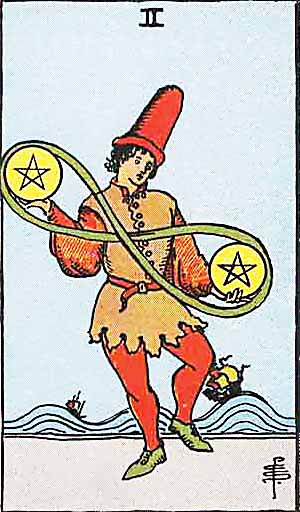 Two of Pentacles, Reversed |
| Significator #1 | 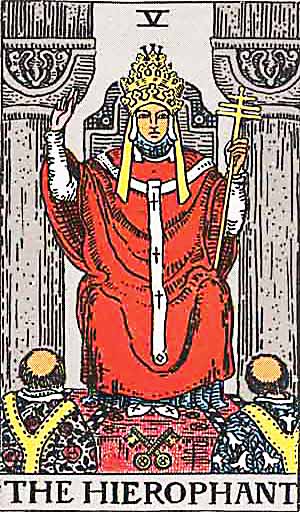 V – The Hierophant, Reversed Significator #2 |
|
 XV – The Devil, Reversed |
Next Step | 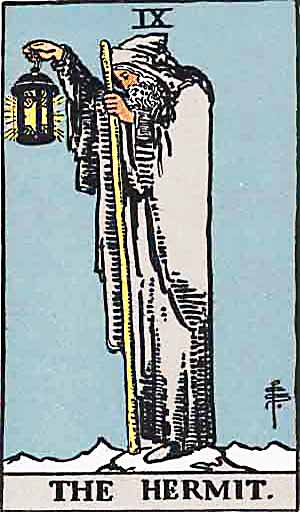 IX – The Hermit |
 Three of Swords |
||
Surprising Experiences 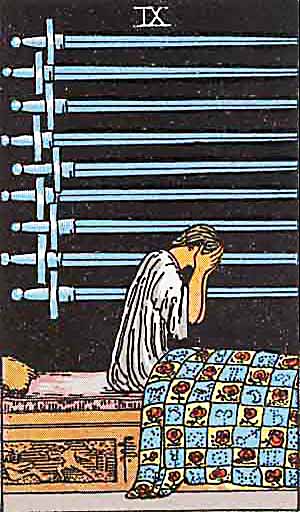 Nine of Swords, Reversed |
||
Outcome  Knight of Wands |
Significator #1
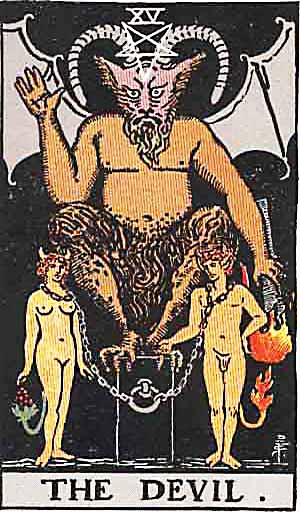
XV – The Devil, Reversed
The Devil represents temptation, addiction, materialism, and the shadow self. It embodies the forces that bind us to unhealthy patterns, illusions, and attachments. A powerful, frightening figure symbolises the internal and external forces that trap us in cycles of desire, fear, and self-doubt. This card is about the darker side of human nature—the impulses, obsessions, and habits that may seem alluring at the moment but ultimately prevent growth and freedom. The chains are loosely fitted on the figures, suggesting that the freedom to break free from these constraints is possible, but only when you recognise your own power and the nature of your attachments.
Reversed, the Devil can indicate a breaking free from bondage, temptation, or unhealthy attachments. It suggests you are beginning to free yourself from negative patterns, addictions, or toxic situations that have held you captive. However, the reversed Devil also cautions that the work of liberation is ongoing. While the chains are loose, it can take time to confront lingering fears or attachments before you are free. This card reversed encourages continued self-awareness, growth, and healing, reminding you that true freedom comes from within and requires conscious effort to remain free from temptation and negative influences.
In Relationships: The Devil suggests you may be entangled in a toxic or unhealthy relationship dynamic. This could include co-dependency, manipulation, or addiction to the relationship itself. The card warns against staying in situations where attachment or control are the primary forces at play. It may also point to unhealthy patterns in your behaviour, such as fear of intimacy or a reliance on superficial desires rather than deeper emotional connection. The Devil invites you to take a step back and examine your motivations in relationships, encouraging you to break free from unhealthy attachments and embrace healthier, more empowering connections.
In Work: The Devil may indicate that you are trapped in a cycle of materialism, greed, or unhealthy work habits. It could suggest an over-reliance on success or external validation, or feeling bound to a job, career, or ambition that no longer serves your highest good. This card can also point to unhealthy competition, control issues, or toxic environments in the workplace. The Devil encourages you to assess where you are compromising yourself in pursuit of career success or material gain. It suggests that fulfilment comes from aligning with your authentic purpose and breaking free from self-imposed limitations.
Spiritually: The Devil speaks to the shadows within the self—the unresolved fears, ego attachments, and limiting beliefs that keep you from experiencing freedom and enlightenment. This card invites you to confront your inner darkness and the forces that bind you to the lower aspects of your nature. The Devil challenges you to examine your relationship with fear and temptation and recognise how these forces may be blocking your spiritual growth. This card calls for liberation, urging you to break free from whatever is holding you back from experiencing spiritual truth.
Significator #2
IX – The Hermit
The Hermit represents solitude, introspection, wisdom, and guidance. It embodies the search for inner truth and deeper understanding through reflection and self-examination. An older figure carrying a lantern and a staff walks alone, symbolising the solitary journey towards enlightenment. The lantern represents the light of wisdom, illuminating the path ahead, while the staff signifies support and the strength gained through life experience. This card suggests a retreat from the external world to seek answers within and find clarity through introspection.
The Hermit invites you to step back from distractions, slow down, and embrace moments of solitude. It encourages personal growth through reflection, spiritual seeking, and the pursuit of knowledge that can only be found within. The Hermit is a guide, showing that wisdom comes not from external sources, but from within one's heart and mind, developed through self-discovery and careful contemplation.
In Relationships: The Hermit signifies a period of introspection, where you may need to take time for yourself before moving forward in a relationship. It suggests a need to step back and reflect on what you seek in love, away from external influences or distractions. This card encourages you to connect with your inner desires and values, understanding yourself better before committing to a romantic relationship. The Hermit also reminds us that love must start from within, and that personal growth and self-awareness are key to building healthy, fulfilling partnerships.
In Work: The Hermit suggests a time of reflection, seeking deeper meaning or purpose in one's professional life. It may indicate the need to step away from daily work life to gain clarity on one's true calling or long-term goals. This card encourages you to trust your intuition and wisdom when making career decisions and not rush into new opportunities until you have reflected on what will bring you true fulfilment. The Hermit can also point to a career in teaching, counselling, or research, where the act of guiding others or seeking knowledge is central to success.
Spiritually: The Hermit represents the pursuit of inner wisdom and enlightenment. This card invites you to withdraw from the noise of the world and focus on your inner spiritual journey. The Hermit encourages you to trust your intuition, meditate, and seek answers through spiritual practices such as prayer or self-reflection. It emphasises the importance of self-discovery and the belief that enlightenment comes from within. The Hermit also suggests that guidance from a spiritual mentor or teacher may be helpful, but the ultimate truth must be found in solitude.
Early Causes
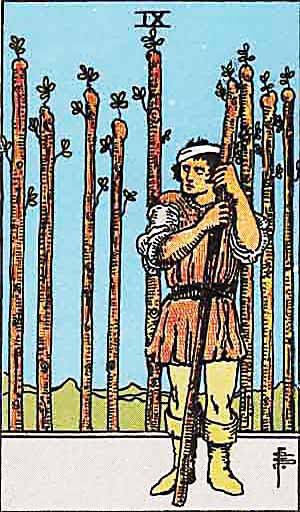
Nine of Wands, Reversed
The Nine of Wands represents resilience, perseverance, and the strength to endure adversity. The ninth card in the Suit of Wands indicates that you have been through a series of challenges or struggles but are still standing strong, holding on to what you have worked for. Depicted as a figure standing defensively, with one wand raised and a weary expression, the Nine of Wands shows a person who has been through a battle, yet continues to guard their position. This card suggests you are at a critical juncture, where your ability to withstand your trials will determine whether you can achieve the eventual success you seek.
Reversed, the Nine of Wands can indicate feeling overwhelmed, burnt out, or unable to continue pushing forward. You may be struggling to maintain your energy or feeling like you've reached your limit. The reversed Nine of Wands may also suggest that you have become overly defensive or guarded, possibly even shutting others out or losing trust. This card warns against giving up too easily, as you may be closer to your goal than you realise. It encourages you to reassess your boundaries and seek ways to replenish your energy and spirit before continuing. It may also point to the need to ask for support, as trying to endure everything alone may not be sustainable.
In Relationships: The Nine of Wands indicates emotional exhaustion or defensiveness in the relationship. You or your partner may have been through emotional challenges, possibly involving past hurts, misunderstandings, or relationship struggles. This card suggests there is still a desire to protect the relationship, but it also indicates that one or both parties may feel worn out by the emotional toll. The Nine of Wands encourages you to maintain your boundaries and stay resilient, but to avoid becoming too defensive or shutting down. For those in a difficult or testing relationship, this card advises perseverance and faith in the relationship's potential for growth and healing. It also asks you to be aware of emotional fatigue and ensure you are not staying in a situation solely out of a sense of obligation.
In Work: The Nine of Wands suggests you have been through a series of struggles or obstacles in your professional life. You may feel the weight of setbacks or the pressure to maintain your success. This card encourages you to stay resilient and trust in your ability to overcome the final hurdles. While you may feel tired or worn down, the Nine of Wands indicates you are close to achieving your goals and that one last push of effort may be needed to achieve success. It is also a reminder to remain cautious and guard against burnout, as your energy levels may be low. The Nine of Wands advises you to pace yourself, acknowledge how far you've come, and use your inner strength to push through the last challenges.
Spiritually: The Nine of Wands represents a time when you are testing your endurance and strength. This card suggests you may feel weary or worn out, having faced trials or challenges on your spiritual journey. However, the Nine of Wands encourages you to remain steadfast and trust that you are close to a breakthrough. It signifies the need to continue on the spiritual path, even when things seem difficult or uncertain. You are urged to tap into your spiritual reserves and maintain your faith, knowing that perseverance will lead to greater insight and growth. The Nine of Wands also suggests the need for spiritual protection, reminding you to guard your energy and remain resilient in the face of challenges.
Triggering Causes
Two of Pentacles, Reversed
The Two of Pentacles represents balance, adaptability, and the management of multiple priorities. This card embodies the energy of juggling responsibilities and finding harmony between various aspects of life, particularly in the material or financial realms. The figure on the card balances two pentacles in an ongoing motion, symbolising the need to stay flexible and adaptable while managing competing demands. This card suggests you are in a period of flux, where you must balance work, finances, relationships, or other material concerns to maintain equilibrium.
Reversed, the Two of Pentacles suggests imbalance, overwhelm, or the inability to manage multiple responsibilities effectively. You may struggle to keep up with the demands in your material world, feeling scattered or unable to find harmony between various aspects of your life. This reversal indicates a lack of focus or being pulled in too many directions at once, leading to stress, burnout, or the neglect of important matters. The Two of Pentacles reversed may also point to financial difficulties, disorganisation, or poor time management. The card urges you to reassess your priorities, simplify your commitments, and regain control over your responsibilities before things become unmanageable.
In Relationships: The Two of Pentacles suggests you may be juggling multiple relationships, commitments, or responsibilities within your romantic life. There could be a sense of needing to find a balance between personal and shared priorities with a partner. This card can indicate a period where you are trying to navigate the demands of love, work, and other aspects of your life simultaneously. It encourages you to find equilibrium and avoid becoming overwhelmed. In some cases, the Two of Pentacles may also signify a need to evaluate whether the effort in the relationship is balanced and whether both parties are equally contributing to the partnership. Flexibility, communication, and compromise are key themes for this card in a romantic context.
In Work: The Two of Pentacles signals a time of juggling multiple responsibilities or projects. You may be managing a heavy workload or balancing between different roles, which requires adaptability and organisation. This card suggests you can handle these challenges, but warns against overextending yourself or neglecting important tasks. Time management and flexibility will be essential for success during this period. The Two of Pentacles also suggests there may be a need to prioritise certain tasks over others and not become bogged down by unnecessary distractions. It is a card that encourages you to find a rhythm that supports your long-term goals while remaining open to adjustments as new opportunities or challenges arise.
Spiritually: The Two of Pentacles represents the need for a balance between material concerns and spiritual growth. You may be struggling to maintain harmony between your physical or financial needs and your spiritual practices. This card suggests that spiritual development requires flexibility, and you may need to find ways to adapt your routine to accommodate both your worldly responsibilities and inner growth. The Two of Pentacles encourages you to stay grounded and centred, even when life feels chaotic or uncertain. It reminds you that balance is not about perfection but maintaining equilibrium in a constantly changing world. The card may also signal the need for adaptability in how you approach your spiritual path, allowing you to flow with changing circumstances rather than resisting them.
Higher Perceptions
Nine of Cups, Reversed
The Nine of Cups signifies emotional contentment, fulfilment, and the realisation of desires. Depicted as a figure seated in front of nine neatly arranged cups, with a look of satisfaction and pride, this card represents a time when your emotional needs have been met, and your desires have come to fruition. The Nine of Cups indicates a period of emotional success, where you find joy, peace, and gratitude, having achieved personal fulfilment. It suggests you have worked hard to manifest your dreams and are now experiencing the rewards of your efforts.
Reversed, the Nine of Cups indicates that emotional contentment may be elusive or you may feel unfulfilled, despite outward appearances of success. It can suggest dissatisfaction or a longing for something more, even though you have achieved your desires. The reversal of the Nine of Cups may point to excess, indulgence, or taking things for granted. It may also indicate that you are pursuing superficial goals that do not bring true happiness or ignoring deeper emotional needs. The Nine of Cups reversed invites you to reassess your desires and values, to find a more meaningful sense of fulfilment that aligns with your emotional well-being.
In Relationships: The Nine of Cups represents emotional fulfilment and happiness. This card signifies a time when you are content in your romantic life, where wishes and desires related to love and connection have been realised. It may suggest that you have found a partner who meets your emotional needs or are experiencing harmony and mutual satisfaction in a current relationship. For singles, the Nine of Cups indicates that emotional contentment and happiness are within reach and that you may soon find a relationship that aligns with your deepest desires. This card encourages you to enjoy the love you have while remaining open to new emotional experiences.
In Work: The Nine of Cups indicates professional satisfaction and the fulfilment of career goals. It suggests you have achieved success in your work or are on the verge of realising your professional ambitions. This card celebrates the completion of a goal, whether a promotion, project, or recognition, and signals a time to take pride in accomplishments. The Nine of Cups reminds you to appreciate your hard work and acknowledge the rewards that have come from your efforts. However, it also encourages you to reflect on what brings you fulfilment in your career, suggesting that success is measured by emotional satisfaction rather than external validation or material gain.
Spiritually: The Nine of Cups signifies peace, contentment, and alignment with one's higher self. It indicates that you are experiencing spiritual fulfilment, having found a path or practice that brings you emotional and spiritual satisfaction. This card suggests a time of gratitude and inner peace, where you feel connected to your spiritual journey and at ease with who you are. The Nine of Cups encourages you to continue nurturing your spiritual path, acknowledging the spiritual abundance in your life. It is a reminder that happiness comes from within and can be found in the present moment.
Necessary Conclusions
V – The Hierophant, ReversedThe Hierophant represents tradition, spiritual guidance, conformity, and the pursuit of higher knowledge. It embodies the connection between the material and the spiritual worlds, serving as a bridge between earthly concerns and divine wisdom. The Hierophant, a spiritual leader sits between two pillars, symbolising the balance between different belief systems or realms of existence. He holds a sceptre and makes a gesture of blessing, representing his role as a guide to spiritual enlightenment and as an authority on sacred teachings.
Reversed, the Hierophant can indicate a rejection of traditional values, questioning established belief systems, or feeling trapped by convention. It may suggest that you are struggling with the pressure to conform or feeling disconnected from a spiritual or moral framework. This card reversed encourages you to explore new ways of thinking and seek personal truth, even if it goes against societal norms or expectations. It also suggests the need to break free from dogmatic thinking and find spiritual guidance that resonates with you.
In Relationships: The Hierophant speaks to the importance of tradition, commitment, and spiritual alignment. It may indicate that you seek a relationship grounded in shared values, moral beliefs, or spiritual practices. This card may also suggest the need to commit to a relationship in a formal or traditional manner, such as marriage, or to honour the teachings that come from longstanding cultural or familial expectations. The Hierophant reminds us that relationships can thrive with mutual respect, understanding, and adherence to shared principles.
In Work: The Hierophant suggests you may need to follow a structured path or seek guidance from an established authority in your field. It may mean that success can be achieved through conformity to established norms, practices, and systems. This card encourages you to pursue your professional goals with discipline and a respect for tradition, while also considering mentorship or further education to deepen your knowledge. The Hierophant may also point to a career in teaching, counselling, or religious or spiritual fields, where the transfer of knowledge is central.
Spiritually: The Hierophant represents the pursuit of spiritual knowledge through structured systems, such as religion, philosophy, or spiritual teachings. This card invites you to seek wisdom from established sources through sacred texts, a religious leader, or a disciplined spiritual practice. The Hierophant suggests the path to enlightenment can be found by following tradition, honouring teachings, and connecting to a community of like-minded individuals. It also emphasises the importance of faith, devotion, and moral integrity on the spiritual path.
The Next Step
Three of Swords
The Three of Swords represents heartbreak, emotional pain, and sorrow. This card is often associated with feelings of grief, loss, or betrayal, particularly in relationships. It signifies the piercing of the heart by harsh truths or painful experiences, such as the end of a relationship, a betrayal by a loved one, or a difficult emotional revelation. The image of three swords piercing a heart symbolises the depth of the pain, yet it also suggests healing is possible after the storm. This card is a reminder that emotional suffering, though painful, is often a part of the human experience and can lead to growth and the eventual release of old wounds.
The Three of Swords encourages you to face your emotional pain rather than avoid it, as only through embracing the hurt can you begin to heal. The card acknowledges the importance of processing sorrow, allowing oneself to grieve, and understanding that emotional healing takes time. While the pain may feel overwhelming at the moment, this card reminds you it is temporary and new emotional beginnings are possible once the heart is ready to move on. The Three of Swords is a call to release what no longer serves, trusting that the space left by the pain will soon be filled with peace and renewal.
In Relationships: The Three of Swords signifies emotional heartache, often due to betrayal, separation, or miscommunication. This card may indicate a breakup, an affair, or a painful realisation about a relationship. You may be experiencing sorrow from an old relationship or facing current heartbreak. The Three of Swords encourages you to allow yourself to grieve and acknowledge your emotions, knowing that healing is a process. This card reminds you that you deserve love that is honest, supportive, and nurturing. Though difficult, the Three of Swords offers a moment of introspection where you can learn from experiences and prepare for emotional renewal.
In Work: The Three of Swords suggests emotional pain. This could be a situation of betrayal or disappointment, such as being passed over for a promotion, dealing with workplace conflict, or facing a setback in a project or business venture. The Three of Swords advises you to confront the emotions that come with professional disappointments, recognising that, though painful, these experiences can lead to personal and professional growth. It also emphasises the need to heal and move on from situations that no longer align with your values or goals. The card may also indicate that it is time to get out of a toxic work environment and focus on self-care and emotional recovery.
Spiritually: The Three of Swords represents healing after emotional pain or trauma. This card suggests you may be struggling with spiritual or emotional wounds, possibly stemming from experiences, betrayals, or disappointments. The Three of Swords encourages you to acknowledge the pain and allow it to guide you towards greater wisdom and self-awareness. This card reminds you that healing is necessary for spiritual growth and that confronting your emotional wounds leads to greater inner strength and resilience. The Three of Swords also calls on you to release any spiritual or emotional baggage preventing you from going forward.
Surprises
Nine of Swords, Reversed
The Nine of Swords represents anxiety, fear, cruelty, and emotional suffering. This card indicates a time of mental strain when you may be plagued by worries, sleepless nights, and overwhelming thoughts. A figure sits up in bed, hands on their face as if gripped by nightmares or regret. The swords in this card represent mental conflict and the destructive nature of excessive worry or fear. The Nine of Swords reveals that you are experiencing a period of distress, where your mind runs rampant with negative thoughts, self-criticism, or feelings of guilt.
Reversed, the Nine of Swords suggests that the worst of the mental anguish may be over, and you are beginning to heal from the emotional pain or stress that has plagued you. The reversal indicates you may be waking up from a period of intense worry, recognising that your fears were unfounded or exaggerated. It is a sign that you are gaining clarity and moving through the healing process. The reversed Nine of Swords can also suggest that you are beginning to confront your fears and take steps to overcome your anxieties. It encourages you to continue challenging negative thought patterns and focus on self-care, seeking support when needed.
In Relationships: The Nine of Swords suggests you are experiencing anxiety, fear, or guilt. This could involve obsessing over a mistake, worrying about the future of the relationship, or being consumed by doubts and insecurities. The card may point to sleepless nights or emotional stress caused by unresolved issues, fear of betrayal, or lingering misunderstandings. The Nine of Swords urges you to examine the source of your worries and recognise whether your fears are based on reality or exaggerated by your mind. It encourages open communication, self-compassion, and the need to address underlying issues.
In Work: The Nine of Swords represents stress, burnout, and overwhelming pressure. You may be facing significant anxiety about your job, career trajectory, or financial security. This card suggests you might be struggling with performance anxiety, fear of failure, or a sense of impending crisis. The Nine of Swords also indicates you may be overthinking a particular situation or obsessing over potential negative outcomes. It is a reminder to step back and assess the situation from a clearer perspective, rather than getting lost in fears of doom. The card encourages you to challenge irrational thoughts and focus on practical solutions, seeking help when possible.
Spiritually: The Nine of Swords indicates a period of anxiety, where you may feel disconnected from your path or overwhelmed by existential fears. This card suggests you are struggling with self-doubt, guilt, or fear of judgement, possibly questioning your beliefs, purpose, or connection to the divine. The Nine of Swords calls for self-reflection and addressing the inner turmoil blocking spiritual growth. It encourages you to release fear-based thinking and trust your higher self. This card reminds you that your spiritual journey does not need to be a source of fear or anxiety, but an opportunity for healing, peace, and trust in the greater flow of life.
The Outcome
Knight of Wands
The Knight of Wands represents boldness, adventure, and pursuing goals with passion and vigour. It embodies the energy of someone fearless, dynamic, and determined to move forward in their pursuits, no matter the obstacles. This card signifies action, enthusiasm, and a fiery drive to achieve one's ambitions. Depicted on horseback, charging forward with a wand in hand, the Knight of Wands is on a quest, eager to conquer challenges and explore new frontiers. His energy is contagious, and his confidence in the face of uncertainty encourages you to act decisively and boldly in your own life.
The Knight of Wands is a card of momentum and adventure, signalling a time when you should take action to make things happen. This is a card of inspired movement, where you are being urged to follow your passions, take risks, and embrace opportunities that lead to personal growth. However, the card also warns to avoid recklessness or impulsive decisions, as the Knight can sometimes be too quick to charge ahead without considering the consequences. It encourages enthusiasm but with awareness and responsibility.
In Relationships: The Knight of Wands indicates a time of passionate energy and adventure. For those in committed relationships, this card suggests a renewed sense of excitement, spontaneity, and enthusiasm. It may represent a period of rekindled passion, where both partners are eager to explore new facets of the relationship or take risks together. For those who are single, the Knight of Wands can signify a fast-moving romantic encounter filled with excitement and intensity. However, the Knight of Wands may also point to a tendency for relationships to be temporary, encouraging you to be mindful of how quickly things progress. This card reminds you to stay true to your desires while seeking a balance between passion and stability.
In Work: The Knight of Wands represents bold action, ambition, and the drive to succeed. This card signifies a time when you should take decisive action towards your career goals. The Knight of Wands is determined, fearless, and ready to face challenges head-on, suggesting that you should embrace new opportunities, take risks, and pursue ventures confidently. It can also indicate a new, exciting job or project that requires energy and enthusiasm. While this card encourages fast movement, it also warns against rushing into things without planning. You are encouraged to harness your energy wisely, balancing excitement with practicality to avoid burnout or missteps.
Spiritually: The Knight of Wands signifies intense growth and spiritual exploration. You may feel a pull to expand your consciousness, take risks in your spiritual practices, or go on a journey of self-discovery. This card encourages you to follow your inner calling with excitement and confidence but approach spiritual exploration with an open mind and a sense of purpose. The Knight of Wands represents a spiritual quest, full of new experiences and insights. It's a time to embrace change, seek new wisdom, and venture beyond your comfort zone while staying true to the heart's deepest desires.