Path Spread
Difficulty: Easy
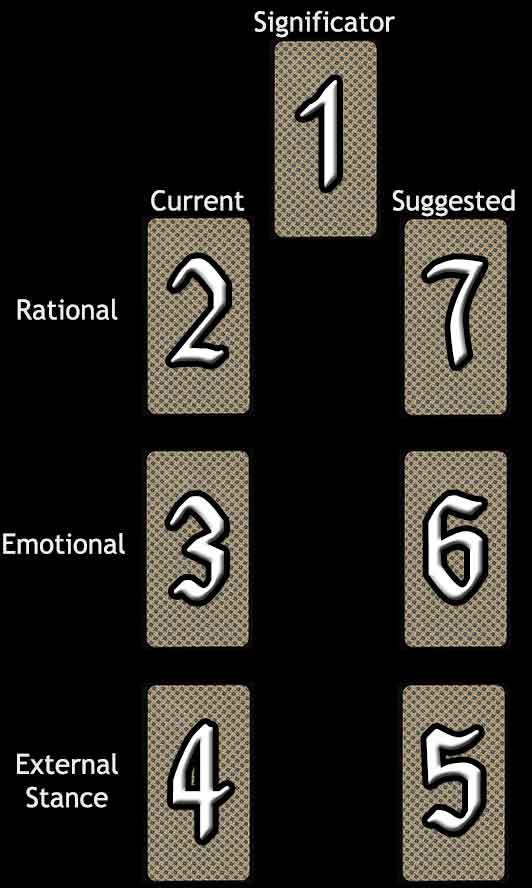
For the Path reading, one asks for suggestions how to behave properly to achieve a desired result. The Current column represents how the reader has been acting, and the Suggestedcolumn suggests how they should act to achieve a certain goal. The chart-like spread uses the standard three levels: Rational, Emotional, and External Stance (how one projects oneself outwardly). When comparing the Current and Suggested cards, the most important thing is to notice the differences between the two cards. It is these differences which hint at the behaviours that should be altered.
Card #1 is the significator, the card which should reflect the nature of the query and/or the desired outcome.
Card #2 shows the way the reader is and has been thinking. Card #7 suggests how to change the way one thinks to serve themselves better.
Card #3 suggests the reader's emotional attitude. Though it may seem difficult to manipulate one's own emotions, it can be done if one puts their mind to it. For example, acting a certain way such as smiling intently for a few minutes will lead the emotions to follow. When a person tries this, as silly as the exercise seems, they find this to evoke the emotion of happiness. For this reading, one should try to make themselves feel the way that Card #6 suggests.
External Stance means how one acts outwardly, how they hope others see them. Card #4 is about how the reader has been acting, while #5 indicates how they should act outwardly, for other people's sake. It is the differences between these cards that hint at what behaviour patterns should be altered.
Your Path Reading
Current |
The Significator 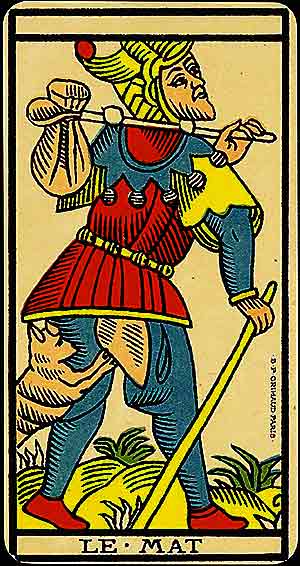 0 – The Fool (Le Mat) |
Suggested |
|
Thought |
 XVIIII – The Sun (Le Soleil) |
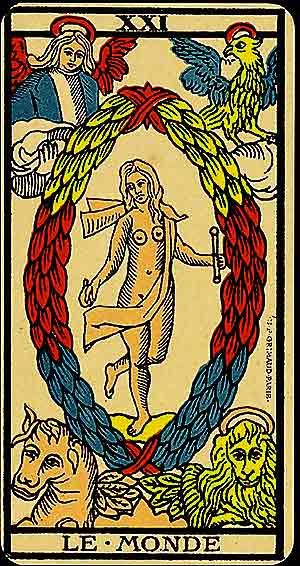 XXI – The World (Le Monde) |
|
Emotion |
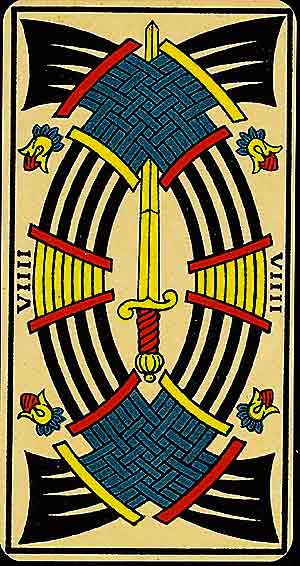 Nine of Swords |
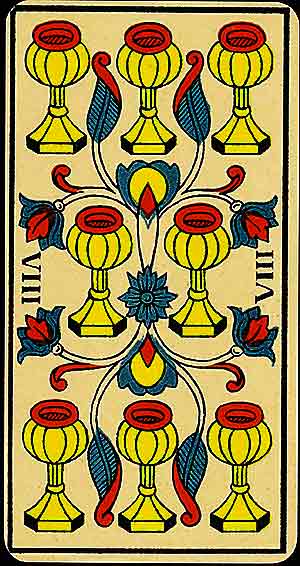 Eight of Cups |
|
External Stance |
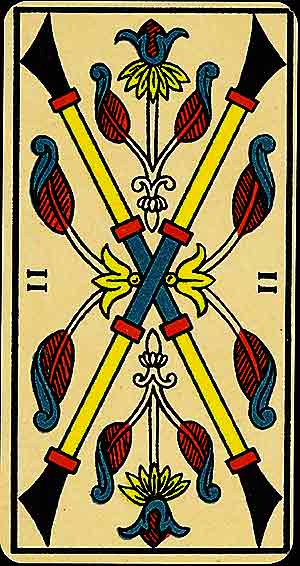 Deuce of Batons |
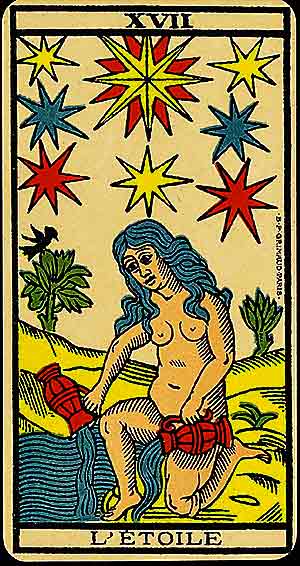 XVII – The Star (L'Étoile) |
The Significator
0 – The Fool (Le Mat)
The Fool represents the untamed spirit and unshackled freedom of the soul. He wanders without boundaries, embodying movement, exploration, and detachment from worldly concerns. This card invites us to embrace change and unpredictability with courage and spontaneity.
Symbolism: The dog biting at the Fool's leg symbolises the tension between freedom and earthly constraints. His staff and bundle represent the burdens and wisdom accumulated on life's journey, carried with both carelessness and purpose. The colourful jester's attire signifies his eccentricity and adaptability, while his forward gaze reflects an openness to the unknown.
In Relationships: A new, unpredictable connection or the need for more spontaneity in existing relationships. Beware of recklessness.
In Work: Embarking on a risky or unconventional path, where intuition takes precedence over plans.
Spiritually: The Fool embodies the soul's leap into the vast unknown, trusting the divine order of chaos.
When ill-dignified: Naivety, poor judgement, or a lack of grounding. It warns of becoming aimless or distracted by superficial pursuits.
Current Thoughts
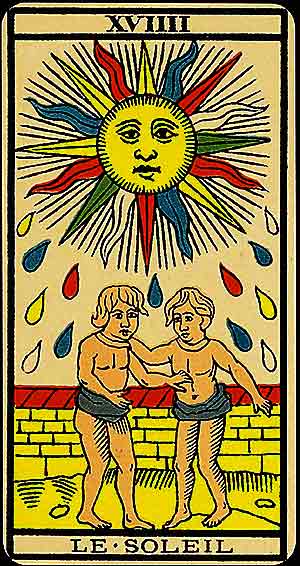
XVIIII – The Sun (Le Soleil)
The Sun represents joy, success, and clarity. It is the card of illumination and vitality, promising growth, harmony, and the fulfilment of goals through clarity and connection.
Symbolism: Two children stand joyfully under the radiant Sun, surrounded by a protective wall. The Sun itself symbolises divine energy and enlightenment, while the figures reflect innocence, unity, and shared happiness. The vibrant rays evoke abundance and the thriving life force.
In Relationships: Mutual happiness, harmony, and a joyful connection. Relationships flourish under the light of clarity and love.
In Work: Success and recognition achieved through positivity and effort. It suggests a time of clarity and accomplishment.
Spiritually: The Sun calls for embracing the light within and aligning with your true purpose, radiating joy and love outward.
When ill-dignified: Arrogance, burnout, or overexposure. It warns against taking blessings for granted or letting ego overshadow gratitude.
Suggested Thoughts
XXI – The World (Le Monde)
The World is the culmination of the journey, representing fulfilment, harmony, and unity. It signifies the integration of all aspects of life and the successful completion of a cycle, opening the way to new beginnings.
Symbolism: A central figure dances within a laurel wreath, symbolising victory and wholeness. The four corners often depict symbolic creatures (the lion, ox, eagle, and man), representing the elements, the fixed signs of the zodiac, or the four faces of a cherubim. The wreath signifies completion and eternity.
In Relationships: A harmonious, complete relationship or fulfilment of long-term goals in love. It reflects unity and shared purpose.
In Work: The successful culmination of a project or phase. Recognition and achievement mark this time of completion.
Spiritually: Le Monde invites the seeker to embrace the interconnectedness of all things, celebrating unity with the divine and readiness for new journeys.
When ill-dignified: Incompletion, stagnation, or feeling unfulfilled despite external success. It warns against losing sight of the bigger picture or resisting closure.
Current Emotions
Nine of Swords
The Nine of Swords symbolises anxiety, guilt, and mental anguish. It reflects the weight of worries and the need to confront inner fears to regain peace.
Symbolism: Nine swords form a dense, oppressive pattern. The arrangement conveys the overwhelming nature of mental burdens, while the floral elements suggest that relief is possible through clarity and self-compassion.
In Relationships: Overthinking or guilt may strain a relationship. It calls for open communication to alleviate fears.
In Work: Stress or self-doubt may block progress. Addressing the root causes will restore confidence.
Spiritually: The card encourages releasing guilt and cultivating self-forgiveness to move forward.
When ill-dignified: Nightmares, relentless worry, or avoidance of problems. It warns against allowing anxiety to take over.
Suggested Emotions
Eight of Cups
The Eight of Cups signifies departure, emotional growth, and the courage to leave behind what no longer serves. It is a card of seeking deeper meaning.
Symbolism: This card shows cups arranged symmetrically, with intertwining vines and floral decorations. The structured yet somewhat rigid design reflects an order that may feel confining, symbolising the need to step away from stability for something more fulfilling. The central flower suggests a guiding light or inner calling, reinforcing the theme of seeking deeper meaning beyond the familiar.
In Relationships: Moving on from a relationship that no longer fulfils you or reassessing your emotional needs.
In Work: Leaving a secure position to pursue something more meaningful. Trust your instincts to guide you.
Spiritually: The card encourages the seeker to embark on a quest for truth, leaving behind superficial comforts.
When ill-dignified: Fear of change, stagnation, or clinging to the familiar. It warns against resisting the call to evolve.
Current External Stance
Deuce of Batons
The Deuce of Batons represents planning and the initial stages of action. It symbolises the tension between potential paths and the courage required to step forward.
Symbolism: Two batons intersect, adorned with foliage that hints at growth and duality. The symmetry of the design reflects stability but also implies the need for decision-making.
In Relationships: A partnership at a crossroads, where mutual goals must be clarified.
In Work: Strategic planning and weighing options for growth. It's a call to act decisively.
Spiritually: The card signifies a moment of reflection, urging you to align choices with your higher purpose.
When ill-dignified: Indecision, hesitation, or lack of direction. It warns against delaying action because of fear of failure.
Suggested External Stance
XVII – The Star (L'Étoile)
The Star is a card of hope, inspiration, and renewal. It symbolises divine guidance and the gentle flow of healing energy after hardship.
Symbolism: A nude figure kneels beside a stream, pouring water onto the land and back into the source, representing the cyclical nature of renewal and the flow of inspiration. Above her, stars shine brightly, offering hope and illumination.
In Relationships: Healing and harmony. It suggests vulnerability and openness to connection.
In Work: Inspiration and the emergence of new opportunities. A time for trust in your creative vision.
Spiritually: The Star invites you to align with your higher purpose, finding peace in the guidance of the cosmos.
When ill-dignified: Doubt, loss of faith, or feeling disconnected from inspiration. It warns against losing hope during challenging times.