
Horse Shoe Spread
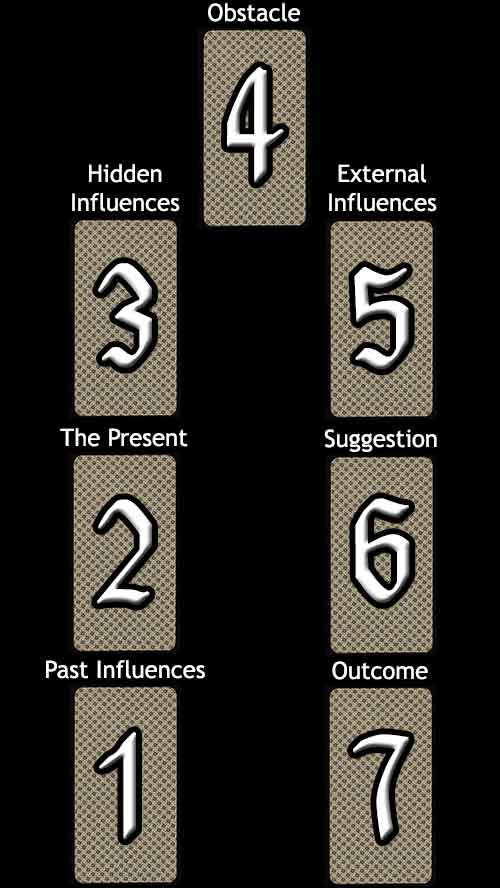
Difficulty: Easy
The Horse Shoe is a classic tarot spread. It is more advanced than the three-card reading, yet simpler than most other spreads. It is a versatile method that can be used for most queries, though there are other spreads which would go into more depth. Like the simple Past, Present, and Future spread, it contains these cards in positions #1, #2, and #7, but also has four other tarot cards that help the reader understand how to deal with the future better. The cards are to be read as follows:
- The Past: Past events affecting the question.
- The Present: The current state or approaching influence.
- Hidden Influences: Things the reader may not be aware of (or barely be aware of).
- Obstacles: This is the challenge: obstacles may be avoided or may have to be dealt with.
- External Influences: Attitudes and thoughts regarding people around the reader.
- Suggestions: Recommended course of action.
- Outcome: The result of following the suggestions.
Your Horse Shoe Reading
Obstacle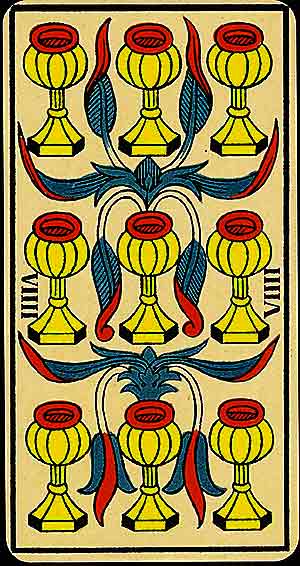 Nine of Cups |
||
Hidden Influences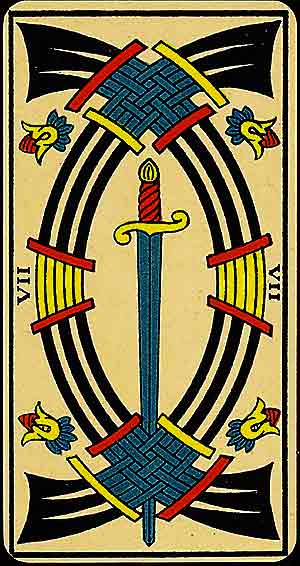 Seven of Swords |
External Influences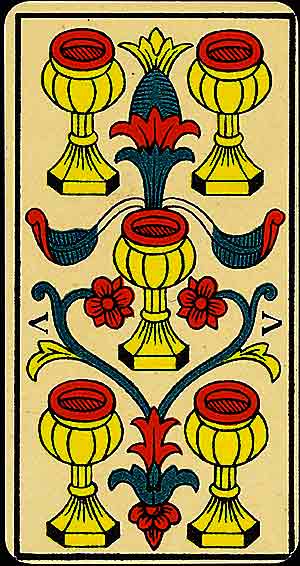 Five of Cups |
|
The Present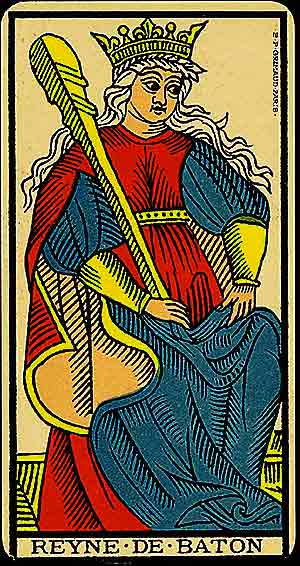 Queen of Batons |
Suggestion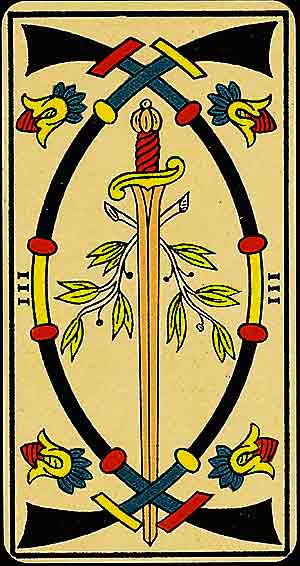 Three of Swords |
|
The Past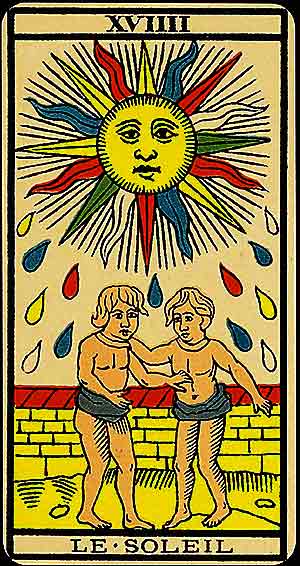 XVIIII – The Sun (Le Soleil) |
The Outcome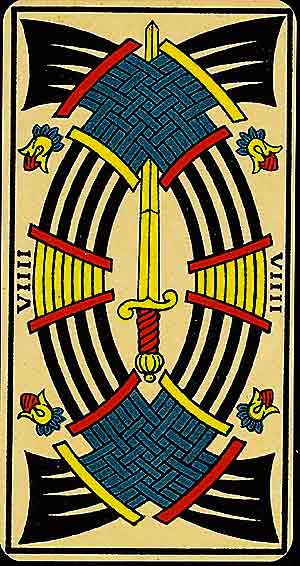 Nine of Swords |
The Past Card represents past events that are affecting the question.
XVIIII – The Sun (Le Soleil)
The Sun represents joy, success, and clarity. It is the card of illumination and vitality, promising growth, harmony, and the fulfilment of goals through clarity and connection.
Symbolism: Two children stand joyfully under the radiant Sun, surrounded by a protective wall. The Sun itself symbolises divine energy and enlightenment, while the figures reflect innocence, unity, and shared happiness. The vibrant rays evoke abundance and the thriving life force.
In Relationships: Mutual happiness, harmony, and a joyful connection. Relationships flourish under the light of clarity and love.
In Work: Success and recognition achieved through positivity and effort. It suggests a time of clarity and accomplishment.
Spiritually: The Sun calls for embracing the light within and aligning with your true purpose, radiating joy and love outward.
When ill-dignified: Arrogance, burnout, or overexposure. It warns against taking blessings for granted or letting ego overshadow gratitude.
The Present Card represents the current state or immediately approaching influence.
Queen of Batons
The Queen of Batons represents creative leadership, warmth, and the nurturing of ideas and relationships. She inspires confidence and demonstrates the power of blending intuition with action.
Symbolism: Seated on her throne with a commanding yet approachable presence, the Queen holds her baton with purpose. The aura of growth and vitality surrounds her, emphasising her connection to creativity and nurturing energy.
In Relationships: The card signifies loyalty, passion, and the deepening of bonds through mutual inspiration. It suggests a partner who brings warmth and confidence to the relationship.
In Work: It highlights leadership, creativity, and the ability to inspire a team or execute a vision with determination and grace.
Spiritually: The Queen calls for alignment with your inner fire, trusting your intuition to guide your creative and spiritual pursuits.
When ill-dignified: Overconfidence, manipulation, or burnout. It warns against using charm for selfish gains or losing balance in the pursuit of ambitions.
Hidden Influences - Things that you may not be aware of, or barely be aware of.
Seven of Swords
The Seven of Swords symbolises strategy, cunning, and the challenges of navigating complex situations. It reflects the need for careful planning but warns of dishonesty or shortcuts.
Symbolism: Seven swords form a slightly chaotic arrangement, reflecting the complexity of the situation. One blade is framed by six. The decorative elements hint at the potential for creative solutions amid disorder.
In Relationships: Secrecy or hidden motives. Open communication is key to avoiding misunderstandings.
In Work: Strategic thinking is required, but ensure your actions align with your ethical standards.
Spiritually: The card challenges you to face your truths rather than evading responsibility.
When ill-dignified: Deception, betrayal, or self-sabotage. It warns against dishonesty with oneself or others.
Obstacle - This is the challenge.
Nine of Cups
The Nine of Cups is a card of contentment, fulfilment, and the realisation of emotional desires. It is sometimes referred to as the 'wish card', symbolising the joy of achievement.
Symbolism: Nine cups are arranged in a symmetrical, flowing pattern, with flourishing decorations that reflect abundance and satisfaction. The balanced structure suggests harmony and emotional success.
In Relationships: Emotional satisfaction and a harmonious relationship. It may signify a wish fulfilled in love.
In Work: Recognition and rewards for hard work. Enjoy the fruits of your labour and celebrate your achievements.
Spiritually: The card reflects gratitude and alignment with your inner truth, inviting you to celebrate your blessings.
When ill-dignified: Complacency, overindulgence, or self-centredness. It warns against taking emotional fulfilment for granted.
External Influences - Attitudes about this situation from people around the querent.
Five of Cups
The Five of Cups symbolises loss, regret, and the emotional challenges of letting go. It speaks of the need to acknowledge grief but also to recognise the potential for healing.
Symbolism: Five cups form a crossing arrangement, with floral motifs hinting at the possibility of renewal amidst sorrow. The imbalance reflects the disruption caused by loss or disappointment.
In Relationships: Heartbreak or unresolved emotional wounds. It suggests healing and moving forward after a period of sadness.
In Work: A setback or failure that offers lessons for future growth. Focus on what remains rather than what has been lost.
Spiritually: The card reflects the transformative power of grief and the opportunity for spiritual renewal through acceptance.
When ill-dignified: Dwelling on loss, refusing to heal, or missing opportunities for renewal. It warns against letting regret dominate your outlook.
Suggestion - The recommended course of action.
Three of Swords
The Three of Swords represents heartache, loss, and learning hard lessons. It signifies growth through adversity and the necessity of confronting unfortunate truths.
Symbolism: This card features a single central sword surrounded by an oval frame formed by two curved swords. A central sword stands upright, symbolising clarity, truth, and decisive action, while the encircling swords create a sense of containment or conflict. The presence of floral elements growing from the sword's base suggests that pain and struggle can lead to personal growth and renewal. The structure emphasises resilience, balance, and the ability to overcome emotional hardship through wisdom and perseverance.
In Relationships: A time of heartbreak, betrayal, or separation. Healing comes through acknowledging and processing the pain.
In Work: Disappointment or setbacks in a project or partnership. The card encourages resilience and learning from challenges.
Spiritually: The card signifies the transformative power of emotional trials, urging the seeker to find wisdom in suffering.
When ill-dignified: Lingering grief, self-pity, or refusal to move on. It warns against being trapped by sorrow or blaming others.
The Outcome - What will happen if the suggestion is followed.
Nine of Swords
The Nine of Swords symbolises anxiety, guilt, and mental anguish. It reflects the weight of worries and the need to confront inner fears to regain peace.
Symbolism: Nine swords form a dense, oppressive pattern. The arrangement conveys the overwhelming nature of mental burdens, while the floral elements suggest that relief is possible through clarity and self-compassion.
In Relationships: Overthinking or guilt may strain a relationship. It calls for open communication to alleviate fears.
In Work: Stress or self-doubt may block progress. Addressing the root causes will restore confidence.
Spiritually: The card encourages releasing guilt and cultivating self-forgiveness to move forward.
When ill-dignified: Nightmares, relentless worry, or avoidance of problems. It warns against allowing anxiety to take over.