
Blind Spot Spread
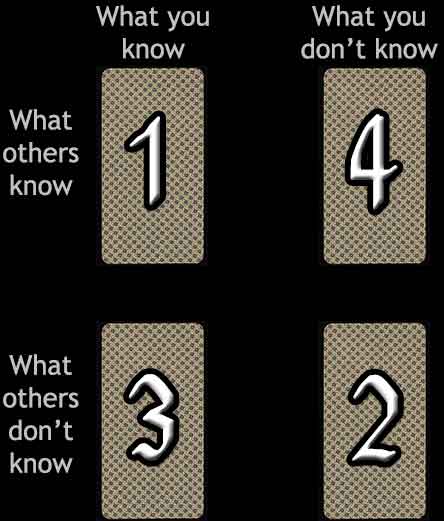
Difficulty: Varies
This tarot spread is used to enhance self-awareness. Questions about learning something about oneself or things that are hidden work very well with this tarot spread, although no question is necessary.
- This tarot card displays the obvious identity, the part of oneself that is consciously known and projected to others.
- This card indicates unconscious driving forces that neither the reader nor others are aware of about them, the great unknown. Nobody knows what this tarot card means, at least not yet...
- The part of oneself that is concealed, to keep others from discovering, is apparent in this card.
- This is the Blind Spot. This is what was asked about, that which this reading should bring awareness of. The reader may wish to pay close attention to these mannerisms.
Your Blind Spot Reading
| What you know | What you don't know | |
| What others know |  XIIII – Temperance |
 XIII – Death (La Mort) |
| What others don't know |  Knight of Coins |
 Five of Cups |
This card displays your obvious identity, the part of you that everyone knows.
XIIII – Temperance
Temperance embodies balance, harmony, and the art of blending opposites into a unified whole. It is a card of moderation and integration, calling for patience and the gentle flow of energies.
Symbolism: An angelic figure pours water between two vessels, symbolising the interplay of opposites and the alchemical transformation process. One cup is blue, and the other is red, suggesting a balance between the material and the spiritual.
In Relationships: Harmony and mutual understanding within relationships. It suggests compromise and blending energies for a greater whole.
In Work: A need for patience and adaptability. Success comes through steady effort and the balancing of resources.
Spiritually: Temperance invites you to harmonise opposing aspects of your being and align with the universal flow.
When ill-dignified: Imbalance, impatience, or excess. It warns against pushing too hard or failing to find equilibrium.
This card shows unconscious driving forces that neither you nor your company is aware of about you. This is the Great Unknown.
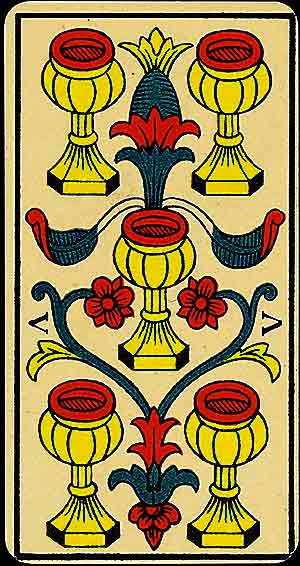
Five of Cups
The Five of Cups symbolises loss, regret, and the emotional challenges of letting go. It speaks of the need to acknowledge grief but also to recognise the potential for healing.
Symbolism: Five cups form a crossing arrangement, with floral motifs hinting at the possibility of renewal amidst sorrow. The imbalance reflects the disruption caused by loss or disappointment.
In Relationships: Heartbreak or unresolved emotional wounds. It suggests healing and moving forward after a period of sadness.
In Work: A setback or failure that offers lessons for future growth. Focus on what remains rather than what has been lost.
Spiritually: The card reflects the transformative power of grief and the opportunity for spiritual renewal through acceptance.
When ill-dignified: Dwelling on loss, refusing to heal, or missing opportunities for renewal. It warns against letting regret dominate your outlook.
The secrets you keep from others are shown by this card.
Knight of Coins
The Knight of Coins represents steady progress, responsibility, and dedication. He embodies a practical, methodical approach to achieving long-term goals.
Symbolism: The Knight rides a sturdy horse, following a coin that floats directly above his horse's head. His armour and deliberate posture symbolise caution and persistence. The horse's grounded stance reflects his reliable nature.
In Relationships: A loyal and dependable partner who may be slow to express emotions but values commitment. It encourages building a relationship through consistent effort.
In Work: Progress comes through hard work, patience, and attention to detail. It's a time to focus on long-term goals rather than quick results.
Spiritually: The Knight reminds the seeker to approach spiritual growth with discipline and a grounded perspective.
When ill-dignified: Stubbornness, stagnation, or excessive caution. It warns against being overly rigid or resistant to change.
This is your Blind Spot. This is what you asked about – what you wished to be made aware of by this reading.
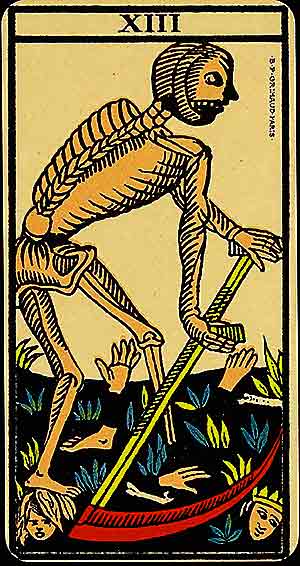
XIII – Death (La Mort)
Death signifies transformation, endings, and renewal. While often feared, this card speaks to the cyclical nature of life and the necessity of clearing away the old to make way for the new.
Symbolism: A skeletal figure wields a scythe, cutting through the remnants of the past—hands, heads, and plants alike. The barren ground reflects the stripping away of what no longer serves, while the sprouting flowers hint at rebirth and growth emerging from decay.
In Relationships: The end of a relationship or a transformative phase within one. It signals profound changes, often for the better.
In Work: A major shift, such as the end of a job or the restructuring of goals. It's a call to embrace new opportunities.
Spiritually: Death teaches the power of release and the necessity of embracing life's cycles to achieve transformation.
When ill-dignified: Fear of change, stagnation, or clinging to the past. It warns against resisting the natural process of renewal.