
Cross Spread
Difficulty: Easy
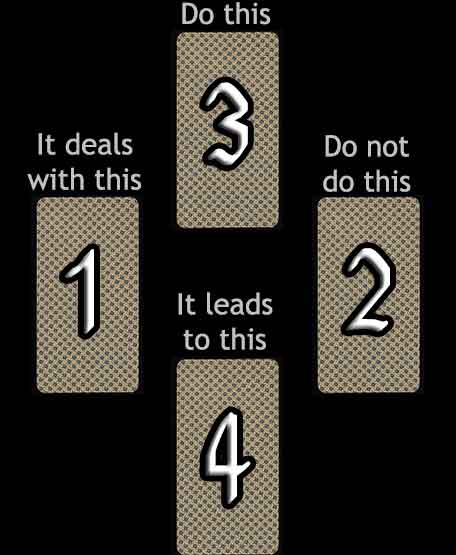
The Cross Spread is good for questions asking for advice. It can also be used to determine the meaning of a confusing card from a previous reading, or for that matter, to shed light on other points of confusion.
In questions asking advice, this tarot spread is self-explanatory. The main thing is to determine the difference between cards #2 and #3. #1 is the topic and #4 is the result.
In questions regarding confusion, such as: "What was the meaning of Card (X) in the last spread?" the main thing is also to determine the difference between cards #2 and #3. In this case, #2 will show what the card was not referring to, and Card #3 will show what was really meant. Card #1 is the topic and #4 represents the purpose it serves.
Your Cross Reading
DO This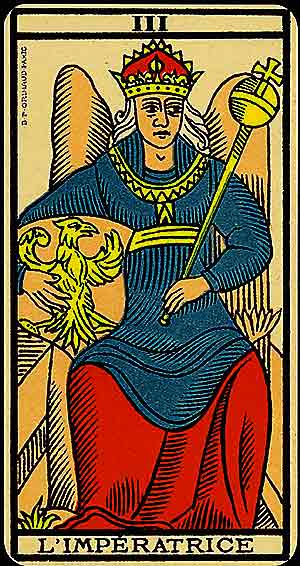 III – The Empress (L'Impératrice) |
||
It Deals with This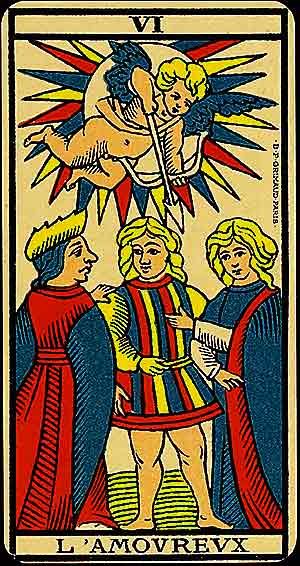 VI – The Lovers (L'Amoureux) |
Do NOT Do This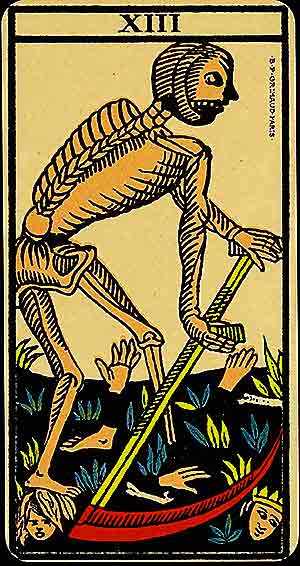 XIII – Death (La Mort) |
|
It Leads to This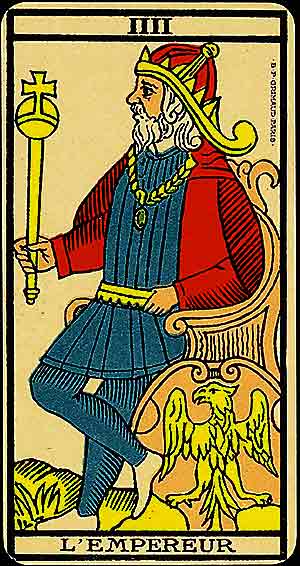 IIII – The Emperor (L'Empereur) |
It Deals with This
VI – The Lovers (L'Amoureux)
The Lovers signifies choice, connection, and the interplay between opposing forces. It represents the power of free will in aligning with one's deepest values and desires.
Symbolism: A central figure stands between two others, often interpreted as a choice between duty and desire or contrasting influences. Above, Cupid aims an arrow, symbolising divine inspiration or the fateful pull of love. The figures' expressions suggest conflict and harmony, reflecting the complexity of relationships.
In Relationships: Profound connections, romantic choices, or a pivotal decision within a partnership. It highlights emotional and spiritual harmony.
In Work: A crossroads where important decisions must align with personal values. Collaboration or partnerships may play a key role.
Spiritually: The Lovers calls for integrating dualities—earthly and divine, passion and reason—on the path to wholeness.
When ill-dignified: Indecision, temptation, or imbalance. It warns of superficial attractions or ignoring inner truth in key decisions.
Do NOT Do This
XIII – Death (La Mort)
Death signifies transformation, endings, and renewal. While often feared, this card speaks to the cyclical nature of life and the necessity of clearing away the old to make way for the new.
Symbolism: A skeletal figure wields a scythe, cutting through the remnants of the past—hands, heads, and plants alike. The barren ground reflects the stripping away of what no longer serves, while the sprouting flowers hint at rebirth and growth emerging from decay.
In Relationships: The end of a relationship or a transformative phase within one. It signals profound changes, often for the better.
In Work: A major shift, such as the end of a job or the restructuring of goals. It's a call to embrace new opportunities.
Spiritually: Death teaches the power of release and the necessity of embracing life's cycles to achieve transformation.
When ill-dignified: Fear of change, stagnation, or clinging to the past. It warns against resisting the natural process of renewal.
DO This
III – The Empress (L'Impératrice)
This card signifies the creative force in its most abundant and fertile form. It represents growth, nurturing, and the life-giving power of nature.
Symbolism: Her sceptre symbolises authority rooted in creativity and love, while the shield bearing an eagle emphasises vision and protection. The Empress's seated posture on her throne exudes a sensual yet controlled energy, symbolising the harmony between fertility and structure. Her crown and flowing robes represent her connection to divine beauty and earthly abundance.
In Relationships: The blossoming of love or a nurturing, supportive relationship. It is a call to cultivate affection with care and patience.
In Work: A time of prolific creativity and the manifestation of projects. Trust your ability to bring ideas to fruition.
Spiritually: The Empress guides you to honour your divine creative potential, celebrating the interplay between spirit and matter.
When ill-dignified: Overindulgence, stagnation, or excessive control. It warns against smothering growth or being consumed by material concerns.
It Leads to This
IIII – The Emperor (L'Empereur)
The Emperor embodies structure, authority, and the power of order. He is the architect of stability, encouraging discipline and leadership in the material world.
Symbolism: The Emperor's throne and square-shaped setting symbolise structure and the solid foundation of his rulership. The sceptre and orb he holds reflect his control over earthly domains. His gaze is firm and unyielding, emphasising responsibility and focus.
In Relationships: Stability, loyalty, and shared goals define relationships under the Emperor's influence. It may also indicate a partner with strong authoritative traits.
In Work: Success through organisation, discipline, and strategic planning. Leadership is both a gift and a responsibility.
Spiritually: The Emperor teaches the balance between setting boundaries and allowing the divine to flow within the constraints of the physical world.
When ill-dignified: Rigidity, stubbornness, or misuse of power. It warns against being controlling or dismissive of emotional needs.