
Blind Spot Spread
Difficulty: Varies
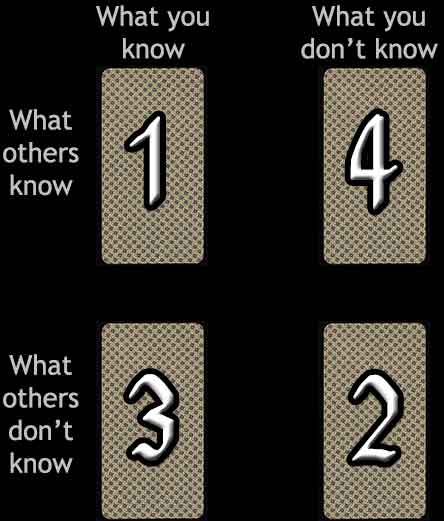
This tarot spread is used to enhance self-awareness. Questions about learning something about oneself or things that are hidden work very well with this tarot spread, although no question is necessary.
- This tarot card displays the obvious identity, the part of oneself that is consciously known and projected to others.
- This card indicates unconscious driving forces that neither the reader nor others are aware of about them, the great unknown. Nobody knows what this tarot card means, at least not yet...
- The part of oneself that is concealed, to keep others from discovering, is apparent in this card.
- This is the Blind Spot. This is what was asked about, that which this reading should bring awareness of. The reader may wish to pay close attention to these mannerisms.
Your Blind Spot Reading
| What you know | What you don't know | |
| What others know | 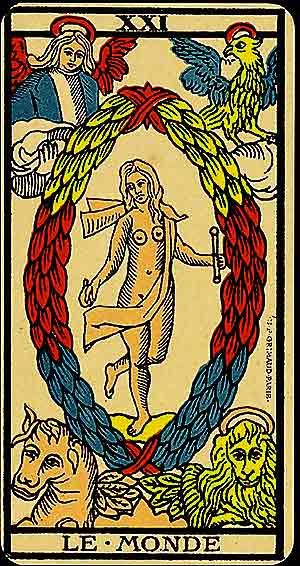 XXI – The World (Le Monde) |
 XIII – Death (La Mort) |
| What others don't know | 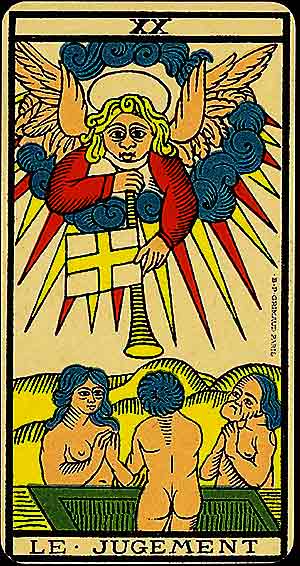 XX – Judgement (Le Jugement) |
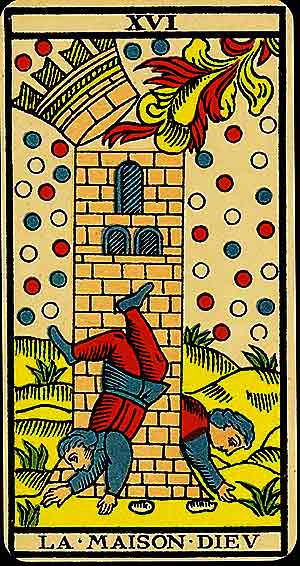 XVI – The Tower (La Maison Dieu) |
This card displays your obvious identity, the part of you that everyone knows.
XXI – The World (Le Monde)
The World is the culmination of the journey, representing fulfilment, harmony, and unity. It signifies the integration of all aspects of life and the successful completion of a cycle, opening the way to new beginnings.
Symbolism: A central figure dances within a laurel wreath, symbolising victory and wholeness. The four corners often depict symbolic creatures (the lion, ox, eagle, and man), representing the elements, the fixed signs of the zodiac, or the four faces of a cherubim. The wreath signifies completion and eternity.
In Relationships: A harmonious, complete relationship or fulfilment of long-term goals in love. It reflects unity and shared purpose.
In Work: The successful culmination of a project or phase. Recognition and achievement mark this time of completion.
Spiritually: Le Monde invites the seeker to embrace the interconnectedness of all things, celebrating unity with the divine and readiness for new journeys.
When ill-dignified: Incompletion, stagnation, or feeling unfulfilled despite external success. It warns against losing sight of the bigger picture or resisting closure.
This card shows unconscious driving forces that neither you nor your company is aware of about you. This is the Great Unknown.
XVI – The Tower (La Maison Dieu)
The Tower signifies sudden upheaval, revelation, and the destruction of false structures. It is a powerful reminder that chaos and doom often precede transformation and growth.
Symbolism: A tower struck by lightning blows its top as figures fall to the ground. The lightning represents divine intervention, while the tumbling balls and figures symbolise the collapse of illusions and false foundations. The falling crown signifies the downfall of pride. Despite its dramatic imagery, the card hints at liberation and renewal.
In Relationships: A dramatic change, often revealing truths that must be addressed.
In Work: Sudden challenges or shifts that dismantle old systems. It's a chance to rebuild on a stronger foundation.
Spiritually: The Tower urges the seeker to let go of illusions and embrace the profound truth revealed in moments of crisis.
When ill-dignified: Resistance to change, denial, or clinging to crumbling structures. It warns against ignoring the signs of impending transformation.
The secrets you keep from others are shown by this card.
XX – Judgement (Le Jugement)
Judgement signifies awakening, transformation, and the call to a higher purpose. It represents a time of reckoning and renewal, offering the opportunity to align with divine will and embrace rebirth.
Symbolism: An angel blows a trumpet from above, awakening figures rising from coffins below. The trumpet symbolises divine calling, while the figures' praying hands reflect surrender and readiness for transformation. The scene suggests liberation and the promise of a new phase of existence.
In Relationships: Healing, forgiveness, or a transformative phase. It may signify a second chance or a fresh start.
In Work: A moment of clarity or a major decision that aligns your work with your higher purpose. Renewal is on the horizon.
Spiritually: Judgement calls you to awaken to your true calling, embrace forgiveness, and prepare for a spiritual rebirth.
When ill-dignified: Resistance to change, self-doubt, or avoidance of accountability. It warns against ignoring the call to transform.
This is your Blind Spot. This is what you asked about – what you wished to be made aware of by this reading.
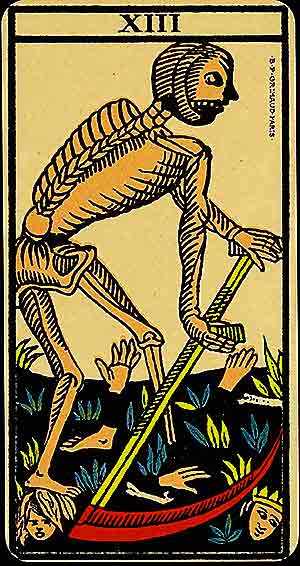
XIII – Death (La Mort)
Death signifies transformation, endings, and renewal. While often feared, this card speaks to the cyclical nature of life and the necessity of clearing away the old to make way for the new.
Symbolism: A skeletal figure wields a scythe, cutting through the remnants of the past—hands, heads, and plants alike. The barren ground reflects the stripping away of what no longer serves, while the sprouting flowers hint at rebirth and growth emerging from decay.
In Relationships: The end of a relationship or a transformative phase within one. It signals profound changes, often for the better.
In Work: A major shift, such as the end of a job or the restructuring of goals. It's a call to embrace new opportunities.
Spiritually: Death teaches the power of release and the necessity of embracing life's cycles to achieve transformation.
When ill-dignified: Fear of change, stagnation, or clinging to the past. It warns against resisting the natural process of renewal.